4WD RC Monster Truck: Terrain, Battery, Setup Tips
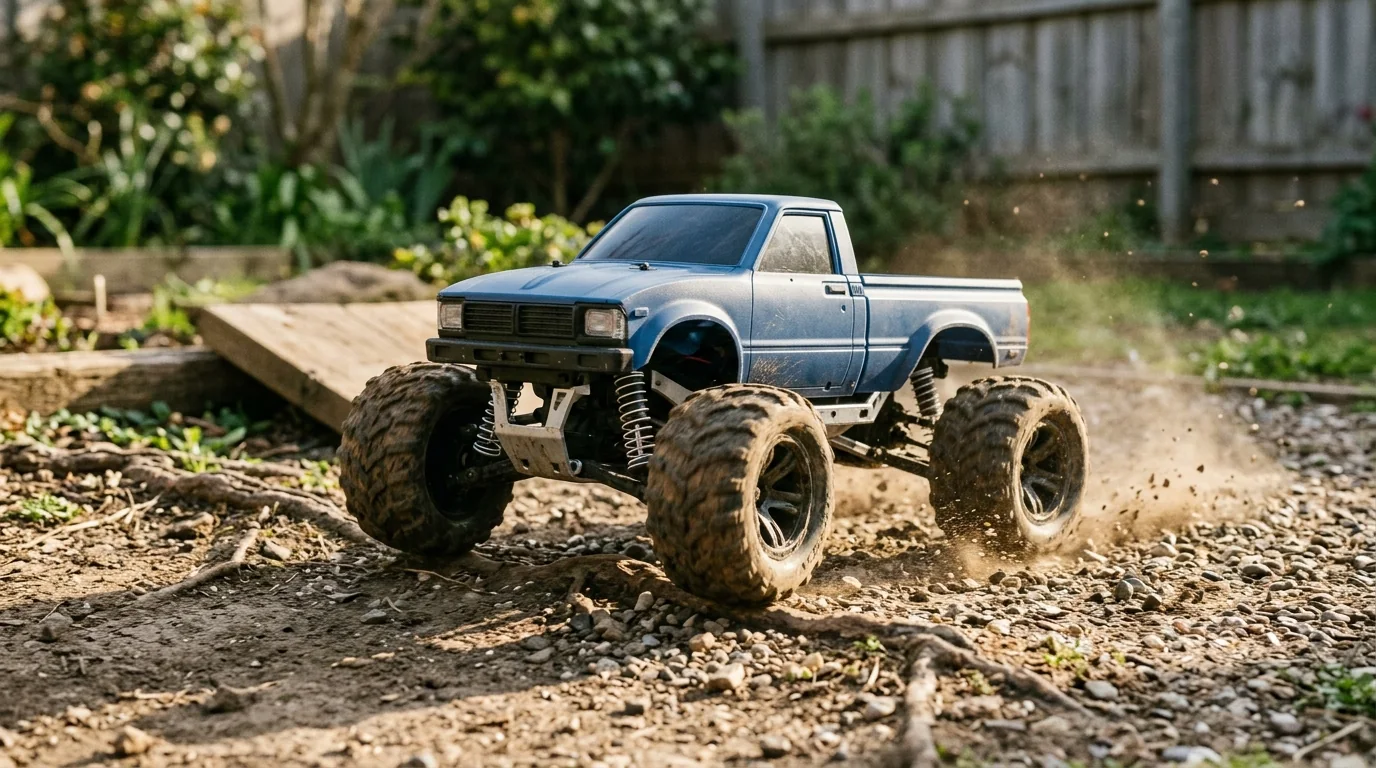
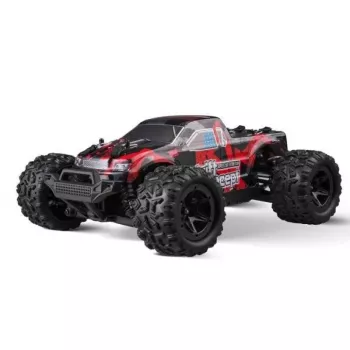
High-Speed Off-Road RC Car 4WD Monster Truck: What to Expect and How to Get the Most Out of It
A 4WD monster-truck style RC car is built for loose dirt, grass, gravel, and backyard obstacles where 2WD cars often lose traction. This guide focuses on the practical things that matter most—handling, durability, battery habits, and simple setup—so your truck feels consistent and stays fun run after run.
Quick look at the 4WD monster truck
Four-wheel drive changes the way an RC truck behaves the moment the surface gets imperfect. Instead of the rear tires doing all the work, power is shared up front, which helps the truck claw forward when the ground is soft or uneven.
- 4WD traction helps the truck keep moving on grass, packed dirt, gravel, and uneven paths.
- Monster-truck tires and a higher stance improve clearance over small rocks, roots, and ruts.
- The best experience comes from matching terrain and driving style to the truck’s capabilities.
At-a-glance details
| Item | Details |
|---|---|
| Product | High-Speed Off-Road RC Car 4WD Monster Truck |
| Price | $49.97 USD |
| Availability | In stock (limited quantity) |
| Drive type | 4WD |
| Typical use | Backyard off-road driving, casual bashing, light jumps |
What makes a monster-truck RC feel fast off-road
On rough ground, “fast” is less about top speed and more about how confidently the truck stays pointed where you want it. A truck that hooks up and tracks straight will feel quicker than one that spins, slides, and constantly needs corrections.
- Traction and stability usually matter more than top speed on rough ground.
- A wider stance and grippy tires reduce spin-outs and help the truck track straighter.
- Throttle control is key: smooth acceleration prevents wheelspin and rollovers.
- 4WD helps pull the front end through softer terrain where rear wheels alone can dig in.
A simple driving habit that pays off: roll into the throttle for the first few feet, then feed in more power once the truck is settled. It reduces fishtailing on gravel and keeps the front end from “hunting” across bumps.
Terrain guide: where it shines and where to be careful
Backyard terrain is rarely consistent, so it helps to know what’s “easy mode” for a 4WD monster truck and what tends to overwork the drivetrain or pack debris into moving parts.
- Great surfaces: short grass, hard-packed dirt, gravel paths, playground sand that’s not too deep.
- Use caution on tall grass (can strain drivetrain and heat electronics), deep loose sand (can bog down), and wet mud (can cause corrosion and bearing wear).
- Jumping tips: keep jumps low and land on all four wheels when possible; avoid nose-first landings.
- After wet or dusty runs: wipe down the body, clear debris from axles/wheels, and let everything dry fully before storing.
If you want the “monster truck look” without the stress, build a small course using garden edging, a couple boards for mild ramps, and a clear landing zone. The goal is repeatable, controlled airtime—not maximum height.
Battery, charging, and run-time habits that protect performance
Most performance complaints with RC trucks come down to battery habits: overheating, charging too soon after a run, or storing the truck dirty and damp. A few routines keep power delivery strong and reduce premature wear.
- Allow the electronics and battery to cool before recharging after a hard run.
- Avoid running until the truck is completely sluggish; stopping early helps extend battery life.
- Keep charging on a non-flammable surface and never leave charging unattended.
- Store the truck clean and dry; keep batteries in a cool place away from direct sunlight.
For additional safety guidance, review lithium-ion best practices from UL Solutions, and keep an eye on general product safety updates through CPSC Recalls.
Durability and maintenance basics for backyard bashing
Backyard bashing is hard on RC cars because the hits are unpredictable: a hidden rock, a curb, or a fence post ends more parts than normal “wear.” The best durability upgrade is a quick check before and after each session.
Setup tips to improve control (no tools or minimal tools)
If you’re gifting the truck to a newer driver, pairing it with a short confidence-building read can help them stick with the learning curve. Options in stock include Empower Your Inner Voice – A Practical eBook Guide and Travel Solo With Confidence (useful for general nerves and focus, even outside travel).
Who it’s best for
Buying notes and what to check when it arrives
If you’re ready to drive, the High-Speed Off-Road RC Car 4WD Monster Truck is in stock now at $49.97.
FAQ
Is a 4WD RC monster truck better than 2WD for off-road driving?
Often, yes—4WD typically provides better traction and more predictable control on loose dirt, grass, and gravel. A 2WD can feel simpler and can be quick on smoother surfaces, but it usually needs more careful throttle control once the terrain gets slippery or bumpy.
How long can it run on a charge?
Run time depends on battery capacity, terrain resistance (grass and sand drain faster), and how you drive (full-throttle runs shorten it). To extend run time, use smoother throttle inputs, avoid tall grass, and take short cool-down breaks between hard sessions.
Is it suitable for kids?
It can be a good fit with supervision, especially during the first few sessions when steering and braking distances are still new. Start in a wide open area, keep speeds moderate, and follow safe charging habits so the experience stays fun and safe.









Leave a comment