AI Personal Mission Statement: Values-Driven Template
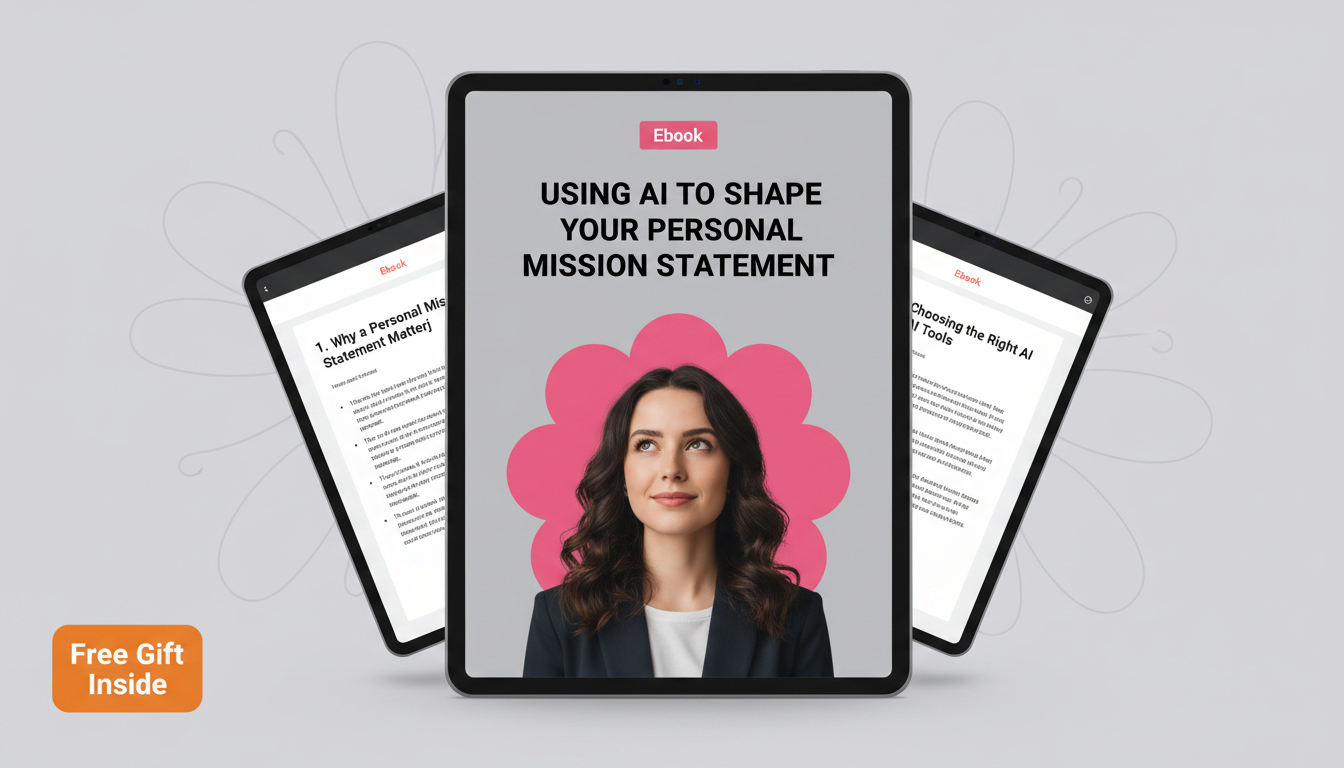
Using AI to Shape Your Personal Mission Statement: A Clear, Values-Driven Guide
A personal mission statement turns scattered goals into a steady direction for decisions, habits, and long-term priorities. With the right questions and a few structured iterations, AI can help translate values, strengths, and ambitions into a short statement that sounds like an actual person—not a corporate slogan—and stays useful as life changes.
What a personal mission statement does (and what it doesn’t)
A mission statement is a practical “north star” you can use when choosing jobs, setting boundaries, building routines, and deciding what deserves attention right now.
- Defines a consistent direction for choices in work, relationships, health, and learning.
- Creates a filter for opportunities: what to say yes to, what to delay, and what to decline.
- Connects daily actions to purpose so motivation isn’t dependent on mood.
- Not a résumé summary, a rigid life plan, or a performance metric.
- Works best when it’s short, specific enough to guide action, and flexible enough to evolve.
If it doesn’t change how decisions get made, it’s just a nice sentence. If it’s so strict you can’t live it during a hard season, it becomes guilt fuel. The goal is “steady guidance,” not perfection.
Why AI helps: speed, reflection, and iteration
AI is useful here because it can rapidly generate options, tighten language, and ask follow-up questions that reveal what’s missing. The best results come when AI drafts and you decide.
| Step | What to do | What AI can help with | Output to keep |
|---|---|---|---|
| Collect inputs | List values, roles, strengths, and recurring goals | Convert notes into themes and patterns | A 1-page “raw materials” summary |
| Draft options | Generate 5–10 candidate statements | Vary tone, length, and focus (career, family, service, growth) | Top 3 drafts worth refining |
| Stress-test | Check for vagueness and contradictions | Point out unclear terms and missing specifics | A list of edits and clarifying questions |
| Finalize | Choose one and set usage rules | Create a short version + a longer version + a mantra line | Final statement set and a review schedule |
This process is fast, but it’s not “hands-free.” Your job is to supply real examples, real trade-offs, and real boundaries—then accept only the wording that matches lived priorities.
Gather the raw materials: values, strengths, and boundaries
Before writing, collect inputs that are specific enough to shape decisions. If needed, define “values” in plain language: the principles that consistently guide choices and judgments (the APA Dictionary of Psychology definition of values can be a helpful reference).
1) Values (5–7 non-negotiables)
- Examples: integrity, learning, compassion, courage, stability, creativity, service.
- For each value, write one “proof behavior” (what it looks like on a Tuesday).
2) Strengths (what repeatedly creates good outcomes)
- Skills: writing, analysis, facilitation, negotiation, design, operations.
- Traits: calm under pressure, curiosity, persistence, humor, patience.
- Relationship strengths: mentoring, listening, making people feel safe, building trust.
If you want a grounded inventory of work activities and skills, browsing role descriptions on O*NET OnLine can spark accurate language for what you do well.
3) Roles and impact
- Roles that matter: professional, partner, parent, friend, community member, creator, learner.
- Who benefits when life is going well: self, family, customers, students, community, future self.
4) Boundaries (what’s off-limits)
- Define what “success at any cost” looks like for you.
- Name what you refuse to trade away (health, relationships, ethics, sobriety, rest, faith, time with kids).
Turn inputs into a statement: practical building blocks
Use a structure that forces clarity. Then let AI generate variations, and keep only what feels true and usable.
Helpful “real life” check: your mission statement should point to behaviors that improve well-being over time—not just status. If you want a deeper lens on what “well-being” can mean, the Stanford Encyclopedia of Philosophy entry on well-being offers a thoughtful overview.
Refine with AI: clarity checks that prevent generic statements
Make it usable: where the mission statement shows up in daily life
A guided option for faster results
If a blank page slows things down, a structured framework can move you from reflection to final wording without overthinking. A resource worth considering is Using AI to Shape Your Personal Mission Statement – AI for Creating a Personal Mission Statement eBook, which focuses on guided questions, drafting templates, and iteration checkpoints so the statement translates into decisions.
For readers who notice that self-doubt makes it hard to “own” a mission statement (even when the words are correct), Empower Your Inner Voice – A Practical eBook Guide on how to overcome self doubt, Build Confidence, and Strengthen Mindset for Personal Growth can support the mindset side of committing to what you actually want to live.
Compare related options such as When to Get a Second Opinion on a Car Repair | Printable Car Repair Checklist for Smart Vehicle Owners to match features, dimensions, and use case before choosing.
FAQ
Can AI write a personal mission statement that feels authentic?
Yes—when the inputs are personal and specific. Provide values, proud moments, trade-offs, and boundaries, then iterate on tone and specificity until it matches real behavior and priorities.
How long should a personal mission statement be?
Keep a main version around 20–45 words, plus a short 10–12 word line for quick recall. Longer versions can exist, but the everyday version should be easy to repeat and use for decisions.
How often should a mission statement be updated?
Review quarterly for small wording adjustments and annually for major revisions, especially after major life changes like a new role, relocation, added family responsibilities, or a significant health shift.











Leave a comment