Credit Card Churning for Beginners: Safe First-Year Plan

Credit Card Churning for Beginners: A Complete Guide to Earning Rewards and Maximizing Benefits
Credit card churning is the practice of opening rewards cards strategically to earn welcome bonuses and ongoing perks, then managing accounts carefully to protect credit health and avoid fees or interest. Done responsibly, it can turn your everyday spending into cash back, free flights, hotel nights, or statement credits—without changing your lifestyle. The safest beginner approach comes down to four habits: understanding how rewards work, qualifying for bonuses with planned spending, tracking every deadline, and redeeming points for real value.
What Credit Card Churning Is (and What It Isn’t)
Churning is bonus-focused. The goal is to earn a welcome offer by meeting a minimum spend requirement (MSR), then continue using the card only if the long-term value makes sense.
- It is: opening cards selectively, timing applications around normal expenses, and paying every statement balance in full.
- It isn’t: carrying a balance, paying interest to “earn rewards,” or spending beyond budget just to hit an MSR.
Common rewards include cash back, airline miles, hotel points, and flexible bank “currencies” that can be used in a travel portal or transferred to partners. Key terms to know: welcome bonus, MSR, annual fee, statement credit, transfer partners, and redemption value (often measured in cents per point).
Boundary rule: never pay interest or late fees to chase a bonus. One month of interest can erase most of the value you worked for.
Prerequisites Before the First Application
Before applying, make sure your foundation is solid: credit knowledge, cash-flow readiness, and a tracking routine that prevents mistakes.
Beginner churning readiness checklist
| Step | Why it matters | What to track |
|---|---|---|
| Check credit reports | Spot errors and confirm baseline health | All 3 bureaus + dispute status |
| Set autopay to statement balance | Avoid interest and late fees | Autopay confirmation + due date |
| Define a 90-day spend plan | Meet minimum spend without overspending | Budget categories + planned charges |
| Create a tracking sheet | Prevent missed bonuses and fees | Open date, MSR deadline, annual fee date |
| Choose 1–2 starter cards max | Reduce denial risk and complexity | Issuer, bonus, expected value |
Credit scores are driven heavily by on-time payments and utilization. If you want a simple refresher on what matters most, the Consumer Financial Protection Bureau explains the main scoring factors in plain language.
Choosing the Right First Cards
For beginners, simplicity beats “maximization.” Start with one card that matches your real goals and is easy to use correctly.
- Pick a rewards style you’ll actually redeem: cash back is straightforward; transferable points can be powerful if you’re willing to learn transfers.
- Decide on annual fees intentionally: no-fee cards reduce pressure; fee cards can still win if perks (credits, insurance, lounge access) outweigh the cost.
- Consider approval odds: recent inquiries, short credit history, and too many new accounts can affect approvals. If you’re unsure how inquiries behave over time, Experian’s guide on hard inquiries is a helpful baseline.
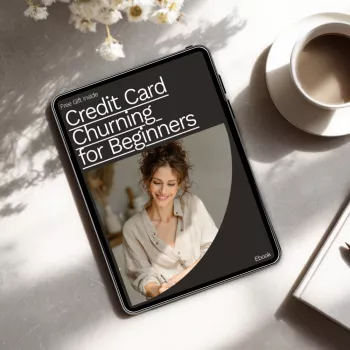
To keep your process organized from day one, use a single playbook rather than scattered notes. The eBook Credit Card Churning for Beginners: A Complete Guide to Earning Rewards and Maximizing Benefits is designed around beginner-friendly checklists, timelines, and redemption planning.
A Safe First-Year Churning Plan
A cautious cadence reduces stress and credit volatility. A first-year plan can be as simple as “one card, learn the system, then consider a second.”
Month 1: One application, zero chaos
Apply for one card and immediately set autopay to the full statement balance. Start charging only planned expenses that you’d pay anyway.
Months 2–3: Finish MSR and confirm the bonus
Complete the minimum spend, then verify the welcome bonus posts. If you’re close to the MSR deadline, avoid last-minute scrambling—preplanned charges are safer than forced spending.
Months 4–6: Add a second card only if everything is stable
If utilization is controlled, payments are smooth, and your tracking sheet is accurate, a second card can make sense. If anything feels messy, wait.
Months 9–12: Decide keep, downgrade, or cancel
How to Meet Minimum Spend Without Overspending
Tracking, Timelines, and Avoiding Costly Mistakes
If confidence and consistency are the weak point, a mindset tool can help keep the system calm and routine-driven. Empower Your Inner Voice focuses on building decision discipline—useful when you’re tempted to apply too fast or spend for the wrong reasons.
Maximizing Redemptions: Getting Real Value From Points
For travelers building confidence on the road (especially when trips are funded by points), Travel Solo With Confidence pairs well with a rewards strategy by helping you plan calmer, safer itineraries.
When to Stop, Pause, or Scale Up
A Beginner-Friendly Playbook Resource
Beginners do best with a repeatable framework: one place for rules, deadlines, and redemption notes. If you want a step-by-step system rather than piecing advice together, the guide Credit Card Churning for Beginners: A Complete Guide to Earning Rewards and Maximizing Benefits consolidates checklists, sample tracking fields, and first-year pacing so you can move slowly—and still win.
FAQ
Does credit card churning hurt your credit score?
It can cause temporary dips due to hard inquiries and a lower average age of accounts, but on-time payments and controlled utilization can offset the impact over time. The biggest long-term risk comes from missed payments or carrying balances, not from rewards themselves.
How many cards should a beginner open in the first year?
One card is a smart starting point, with a second only after you’ve met the first card’s minimum spend, paid in full consistently, and proven you can track deadlines. The right number depends on your budget stability and how smoothly approvals go.
Is credit card churning legal and allowed?
It’s legal, but each bank sets its own rules for eligibility, bonuses, and account behavior. If terms are violated, issuers may deny a bonus, claw back rewards, or close accounts.











Leave a comment