Plant Watering Schedule Guide: Indoors & Outdoors
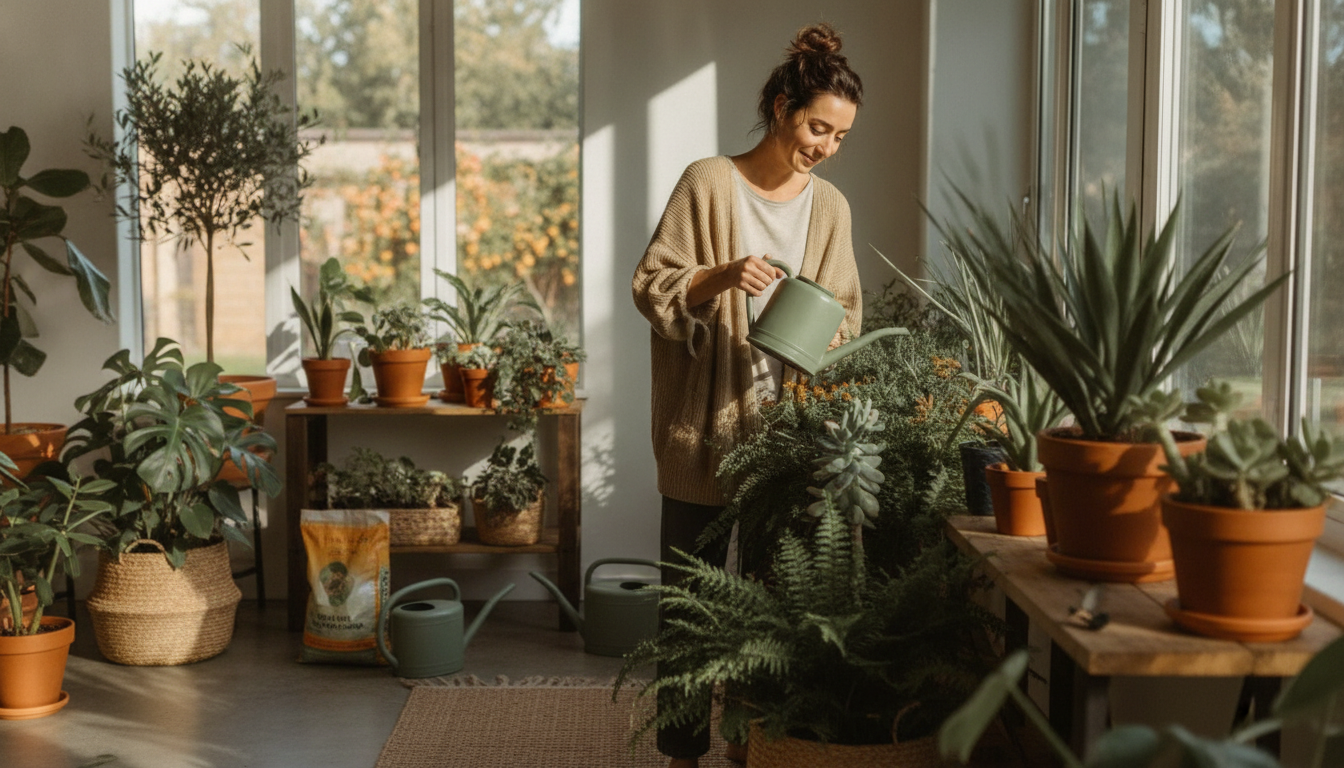
Perfect Watering Schedules for Every Plant Type
A reliable watering routine depends less on the calendar and more on plant type, light, temperature, pot size, soil mix, and season. Use the sections below to match your plant’s needs, spot common mistakes early, and build a schedule that keeps roots healthy indoors and outdoors.
Start With the 5 Factors That Change Any Watering Schedule
- Plant type and growth stage: Succulents store water; seedlings and flowering plants typically need steadier moisture.
- Light exposure: Brighter light increases water use; low light slows drying and raises overwatering risk.
- Temperature and airflow: Heat, wind, HVAC vents, and fans dry soil faster; cool rooms and shade slow evaporation.
- Container and soil: Terracotta dries faster than plastic; fast-draining mixes dry quickly; dense mixes hold water longer.
- Season and dormancy: Many plants slow growth in winter and need less frequent watering even if kept indoors.
For deeper background on moisture, drainage, and indoor plant care fundamentals, see the University of Minnesota Extension guidance on watering houseplants.
A Simple Method to Set Your Baseline (Then Adjust)
- Check soil depth, not just the surface: Use a finger test or moisture meter at the root zone (top 1–2 inches for small pots; deeper for large pots).
- Water thoroughly, then stop: Water until it runs from drainage holes, then empty saucers to prevent root suffocation.
- Use “dry-down rules” by plant group: Some prefer nearly dry between waterings; others prefer evenly moist soil.
- Record a quick note for 2 weeks: Date watered, how dry it was, and conditions (sunny, hot, windy, low light). This reveals the real interval for that spot.
- Adjust one variable at a time: Change frequency before changing volume; change volume before changing soil; repot only when needed.
If you’re trying to “set and forget” a routine, the biggest improvement usually comes from switching from a fixed calendar to a fixed check-in schedule. You can still water on a rhythm—just let the soil test decide who actually gets watered.
Watering Schedule by Plant Type (Quick Reference)
Use the ranges as a starting point; confirm with a soil check before watering. For outdoor plants, rainfall counts—skip scheduled watering if the root zone is already moist. For indoor plants, heating/AC can double drying speed; re-check after any seasonal change.
| Plant type | Soil moisture target | Typical interval (indoor) | Typical interval (outdoor/in-ground) | Notes |
|---|---|---|---|---|
| Succulents & cacti | Let soil dry out fully | Every 2–4 weeks | Every 2–6 weeks (more in heat) | Increase light slowly; reduce sharply in winter |
| Tropical foliage (pothos, philodendron, monstera) | Top 1–2 in dry, then water | Every 7–14 days | 1–2x/week in warm season | Low light = longer interval; avoid soggy soil |
| Ferns | Evenly moist, not waterlogged | Every 3–7 days | 2–4x/week (shade) | Humidity helps; never let dry completely |
| Herbs in pots (basil, cilantro, mint) | Slightly moist; quick dry-down | Every 2–5 days | 2–5x/week depending on sun | Small pots can need daily checks in summer |
| Vegetables (tomatoes, peppers, cucumbers) | Consistent moisture at root zone | N/A (usually outdoor) | 1–3x/week deep watering | Deep, infrequent watering encourages strong roots |
| Houseplant flowering (African violet, peace lily) | Lightly moist; avoid extremes | Every 5–10 days | Weekly in warm season (if outdoors/shaded) | Wilting can mean too dry or root stress—check soil |
| Orchids (phalaenopsis in bark) | Dry slightly between waterings | Every 7–12 days | N/A (usually indoor) | Water in morning; avoid water sitting in crown |
| Trees & shrubs (established) | Deep watering, then dry-down | N/A | Every 1–3 weeks (varies by climate) | New plantings need more frequent deep watering |
Indoor vs. Outdoor: How to Modify the Schedule
For outdoor beds and drought-aware techniques (including seasonal conservation tips), the Royal Horticultural Society’s watering guidance and the USDA water resources offer practical best practices you can adapt to your climate.
Signs of Overwatering vs. Underwatering (And What to Do Next)
Build a Weekly Routine That Works (Without Overthinking)
Printable Schedules and Plant-by-Plant Guidance
A plant-type schedule is most effective when paired with a quick-check method and clear dry-down targets. For a ready-made reference you can keep near your watering tools, see Perfect Watering Schedules for Every Plant Type – Complete Guide to a Watering Schedule by Plant Type for Healthy Indoor & Outdoor Plants.
If building consistent routines is the hard part (especially during busy weeks or seasonal changes), Empower Your Inner Voice – A Practical eBook Guide on how to overcome self doubt, Build Confidence, and Strengthen Mindset for Personal Growth can help you set simple habits and follow-through systems that translate well to plant care check-ins.
FAQ
How often should indoor plants be watered on a schedule?
A fixed calendar is less reliable than checking the root-zone moisture first, because drying speed changes with light, temperature, and pot size. Many indoor plants land anywhere from every few days (ferns, small herb pots) to every few weeks (succulents), so two weekly check-in days works better than “water every Sunday.”
Is it better to water plants in the morning or at night?
Morning is usually best outdoors because it reduces evaporation compared with midday heat and lowers disease risk compared with overnight wet foliage. Indoors, timing matters less, but avoid late-night soaking in cool, low-airflow rooms where soil stays wet longer.
What’s the fastest way to tell if I’m overwatering?
Check whether the soil stays wet for days, especially down at the root zone, along with yellowing lower leaves, fungus gnats, or a musty smell. Pause watering and verify drainage holes and soil aeration before watering again.












Leave a comment