How to Choose a Sport You’ll Stick With Long Term
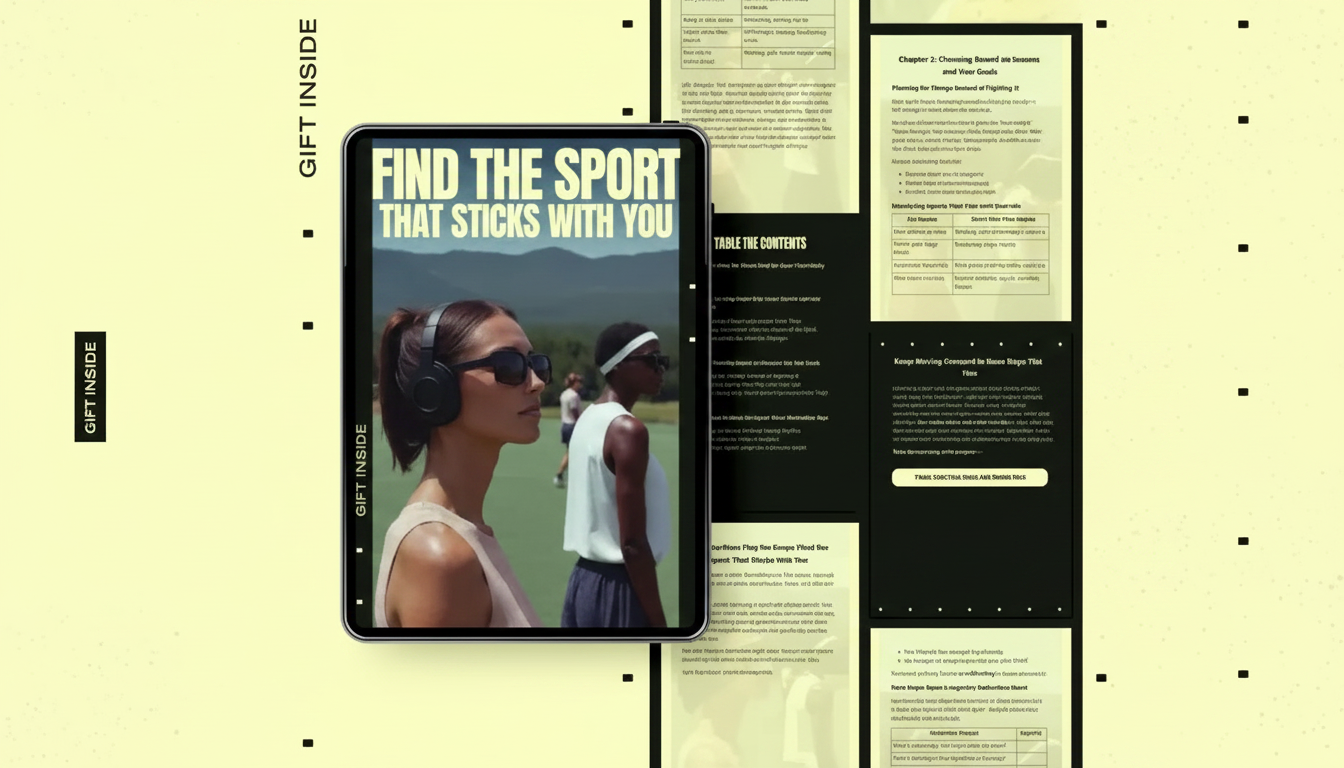
Find the Sport That Sticks: A Practical Path to Enjoying Movement for Life
Choosing a sport that lasts is less about willpower and more about fit: your body, schedule, personality, environment, and the kind of progress that feels rewarding. A sustainable choice is one that feels “easy to return to” on busy weeks, offers clear next steps as skills grow, and supports health without constant mental negotiation. Use the checkpoints below to narrow options quickly, test them safely, and turn a good match into a long-term habit.
Start with the “stickiness” factors (not the hype)
Trendy workouts come and go; the sports people keep tend to share a few practical features. Before comparing “best” options, identify what makes movement feel naturally repeatable.
- Enjoyment: notice what feels fun—speed, rhythm, competition, flow, strategy, music, outdoors, teamwork, or solitude.
- Friction: list the barriers that typically break routines (commute time, weather dependence, expensive gear, class schedules, intimidation).
- Recovery cost: favor options that leave you functional the next day; soreness shouldn’t be the price of admission.
- Identity fit: choose what matches the way progress feels satisfying (skill mastery, social connection, performance metrics, or exploration).
- Consistency beats intensity: the best sport is the one that can happen even on a “minimum day.”
If overall health is part of the goal, it helps to know the baseline targets for adults. The CDC’s physical activity guidance and the WHO physical activity recommendations can help you sanity-check whether your plan is realistic and sufficient.
Match the sport to your body and constraints
A great “on paper” sport can still fail if it clashes with your joints, schedule, or access. Start with constraints first; it’s faster and less frustrating.
- Joint and impact tolerance: low-impact options (swimming, cycling, rowing, walking sports) can be easier to repeat than higher-impact options (running, basketball, soccer).
- Injury history and movement preferences: prioritize sports that strengthen weak links without poking old issues; consider coaching early if form matters (tennis, lifting, climbing).
- Time reality: pick something that fits your true windows (20–30 minutes at home, lunch breaks, weekends).
- Access and environment: home-friendly (bodyweight strength, jump rope), neighborhood-friendly (walking, running, calisthenics park), facility-based (pickleball, swimming, martial arts).
- Budget: compare membership fees, lessons, shoes, and replacement gear; a sustainable sport is financially repeatable.
Quick sport-fit checklist (score each 1–5)
| Factor | What to consider | Score (1–5) |
|---|---|---|
| Time fit | Can it fit your typical week without heroic planning? | |
| Access | Is it available nearby or at home year-round? | |
| Cost | Is the monthly cost comfortable long term? | |
| Enjoyment | Would you do it even without “results” for a month? | |
| Recovery | Can you return again in 24–48 hours? | |
| Progress clarity | Are there obvious next steps to improve? | |
| Social fit | Does it match your preferred level of interaction? | |
| Weather dependence | Can you do it despite rain/heat/cold? |
Choose the motivation style you can actually sustain
Motivation isn’t one thing; it’s often a “type.” When you pick a sport that matches your motivation style, showing up becomes simpler.
- If novelty motivates: choose variety-rich sports (bouldering gyms, martial arts, dance styles, trail running, racquet sports with drills).
- If structure motivates: pick sports with built-in programming (classes, leagues, coached sessions, swim sets, training plans).
- If social energy motivates: team sports, partner sports, group rides, run clubs, pickleball ladders, community leagues.
- If autonomy motivates: solo-friendly sports with flexible scheduling (strength training, rowing machine, cycling, yoga, hiking).
- Minimum viable sessions: define a short version (10–15 minutes) that counts on low-energy days to protect continuity.
Run a two-week experiment instead of making a forever decision
Long-term choices get easier when you stop trying to “decide correctly” and start gathering real data from your own life.
- Pick 2–3 candidates and schedule them like appointments (for example, 3 sessions each over 14 days).
- Use a simple metric: “Did I show up?” plus a quick rating after each session (fun, effort, confidence, soreness next day).
- Borrow or rent gear before buying; many gyms and community centers offer trials.
- Keep sessions easy at first: aim for technique and comfort, not peak performance.
- Decide with evidence: choose what wins on enjoyment, low friction, and recovery—then repeat for 6–8 weeks before re-evaluating.
Build a routine that survives busy weeks
The difference between “sometimes” and “for years” usually comes down to design. Build for the messy weeks, not the perfect ones.
Common sticking points and simple fixes
A practical guide to choosing your sport (and keeping it)
For a deeper framework and prompts you can reuse whenever life changes your schedule, see Find the Sport That Sticks with You – Practical Guide on how to choose a sport long term, Build Sustainable Motivation & Enjoy Movement for Life.
If self-doubt or overthinking is the real barrier to showing up consistently, Empower Your Inner Voice – A Practical eBook Guide on how to overcome self doubt, Build Confidence, and Strengthen Mindset for Personal Growth pairs well with any training plan by strengthening the mental side of follow-through.
FAQ
How long should a new sport be tried before deciding if it’s a good fit?
Give it a two-week, low-pressure experiment to assess friction, enjoyment, and next-day recovery. Then commit for 6–8 weeks to judge it fairly, since beginners often need time for skills to feel comfortable and soreness to settle down.
What if motivation disappears after the first few weeks?
Reduce friction first: simplify the schedule, make gear “grab-and-go,” and switch to minimum viable sessions on tired days. Add support through a class, coach, or consistent partner, and track attendance or small skill wins rather than outcomes.
Is it okay to switch sports often?
Switching is useful during exploration, especially early on. For long-term benefits, stick with one primary sport for a season while keeping optional cross-training for variety and balance.











Leave a comment