AI Morning Routine: Calm Starts With Flexible Time Blocks

Using AI to Design a Stress-Free Morning Routine: Calm Mornings, Productivity, and Daily Balance
A calmer morning rarely happens by accident. It comes from a routine that fits real life: sleep patterns, work start times, family needs, energy dips, and the kind of stress that shows up before breakfast. AI can help by turning a vague goal (“less rushed”) into a simple, repeatable plan with time blocks, decision rules, and a backup version for chaotic days. The result is a routine that protects focus, lowers overwhelm, and still leaves room for flexibility.
What a stress-free morning routine actually looks like
A calm morning isn’t “perfect.” It’s a morning with fewer sharp edges—less scrambling, fewer surprises, and fewer decisions before your brain is fully online.
- Fewer decisions before 9 a.m.: meals, clothes, and priorities are pre-decided.
- One clear “first win” to build momentum (make the bed, drink water, 3-minute tidy).
- A gentle ramp-up: light, hydration, movement, and a short planning check instead of instant urgency.
- Boundaries around inputs that spike stress (news, email, social feeds) until a chosen time.
- A routine with two modes: a full version and a 10–15 minute “minimum viable morning.”
If sleep is inconsistent, it helps to treat mornings as “energy management,” not self-discipline. The CDC notes that sleep affects many aspects of health and daily functioning, including alertness and mood (CDC — Sleep and Sleep Disorders).
How AI helps reduce morning stress (without turning life into a spreadsheet)
AI works best as a fast planning assistant—not a strict supervisor. Instead of micromanaging every minute, it can generate structure you can actually follow.
- Creates structure fast: generates realistic time blocks from a wake-up time and non-negotiables.
- Personalizes to constraints: commute, kids’ schedules, medications, workouts, and energy levels.
- Plans around friction points: identifies what repeatedly causes lateness or irritability and builds buffers.
- Builds repeatable scripts: “If running 10 minutes late, do X; if slept poorly, do Y.”
- Supports reflection: suggests small weekly adjustments based on what felt rushed vs. calm.
That last point matters. Stress compounds when the day starts with adrenaline. The American Psychological Association describes how stress can affect the body and mind, making it harder to concentrate and recover from daily demands (American Psychological Association — Stress effects on the body).
Set up your inputs: the 7 details that make the routine feel effortless
AI can only build something realistic if it has the right constraints. Before you draft a routine, gather these details in a note (one time), then adjust as life changes:
- Wake time and out-the-door time (or first meeting time).
- Sleep quality range (typical hours; how often poor sleep happens).
- Morning responsibilities (kids, pets, caregiving, breakfast, school drop-off).
- Stress triggers (phone scrolling, missing items, clutter, decision fatigue, feeling behind).
- Health needs (hydration, movement limitations, meds, breakfast preferences, caffeine timing).
- Work priorities (deep work vs. reactive tasks; when creativity is highest).
- Environment cues (lighting, music, tidy zone, prep station for keys/wallet/bag).
Once those inputs are clear, a routine becomes a set of friendly defaults. You’re not “forcing” calm—you’re removing the common reasons mornings spiral.
A practical AI-built routine template (choose the time blocks that fit)
Think in blocks, not rigid timestamps. If one block runs long, the whole morning doesn’t collapse—because you know what matters most.
- Arrival buffer: a 5–10 minute cushion that protects calm even when something goes wrong.
- Body first (5–15 min): water, light exposure, quick stretch or short walk.
- Mind clear (3–8 min): breathing, journaling prompt, or a short gratitude scan—kept minimal and repeatable.
- Plan the day (5 min): pick 1–3 priority outcomes, then schedule the first focus block.
- Prep and launch (10–20 min): clothes, food, bag/keys, quick reset of the space you return to later.
- Minimum viable morning (10–15 min): water + basic hygiene + one priority note + out the door.
Sample morning routine options (full vs. minimum viable)
| Block | Full version | Minimum viable version |
|---|---|---|
| Reset body | Water + light + 5–10 min movement | Water + 60 seconds of stretching |
| Clear mind | 3–5 min breathing or journaling | 3 deep breaths + one sentence intention |
| Set direction | Top 3 outcomes + calendar scan | Pick 1 outcome + next action |
| Launch prep | Pack, clothes, quick tidy, simple breakfast | Grab essentials + quick snack |
For the “mind clear” block, keep it lightweight. Mindfulness is associated with reduced anxiety and improved emotional regulation for many people when practiced consistently (Harvard Health Publishing — Benefits of mindfulness).
Decision rules that keep mornings calm when plans change
Make it stick: cues, environment, and tiny automations
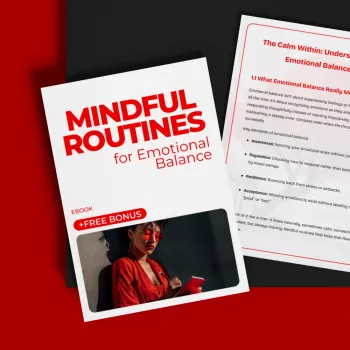
Digital guide: build your routine step-by-step with AI
- Using AI to Design a Stress-Free Morning Routine (Digital Guide) — A step-by-step system to turn your real constraints into a full routine, a minimum viable morning, and decision rules for low-sleep or late-start days.
- Empower Your Inner Voice (Practical eBook Guide) — Support for reducing self-doubt and strengthening follow-through, especially when routines get disrupted and perfectionism tries to take over.
FAQ
How long should a calm morning routine be?
Anywhere from 10 to 60 minutes can work, depending on your schedule. Consistency matters more than length, so a 10–15 minute minimum viable morning that covers essentials is often the most sustainable.
What if mornings are unpredictable because of kids, pets, or caregiving?
Use flexible blocks, add a small buffer, and rely on decision rules so you don’t have to rethink everything each day. Anchor the routine to 1–2 non-negotiables (like water and a quick intention) and let the rest adapt.
Can a morning routine improve productivity without feeling rigid?
Yes—routines reduce decision fatigue, protect an early “first focus” window, and delay reactive inputs like email or news. Instead of daily over-optimization, a brief weekly review keeps the routine effective without becoming strict.









Leave a comment