Speeding Ticket vs. Insurance: When Rates Rise & Why

How a Speeding Ticket Really Affects Your Insurance: A Comprehensive Guide for Drivers
A speeding ticket can raise insurance costs, change eligibility for discounts, and even affect renewal decisions—but the impact depends on the violation, the state, and the insurer’s rating rules. What matters most is the final court outcome (the “disposition”), when it hits your driving record, and how your insurer applies it during the next rating cycle. The sections below walk through what typically happens from the day you’re cited to the moment your premium changes, plus realistic steps to limit the damage.
What changes after a speeding ticket
Most auto insurers treat speeding as a moving violation, which can increase the risk score used to set rates. That doesn’t always mean your bill changes the next day—many policies won’t reflect the new risk until the next time the insurer re-rates your policy.
When the ticket becomes “chargeable” under your insurer’s rules, the consequences commonly fall into a few buckets:
- A surcharge (an added fee/percentage applied to your base premium).
- Loss of discounts such as safe-driver, claim-free, or violation-free savings.
- Tier changes (moving from a preferred tier to standard or non-standard pricing).
- Underwriting action in more severe or repeated cases, including possible non-renewal.
Your overall profile still matters. A single minor ticket may land softly for a long-time driver with a clean record, while the same ticket can sting for a newer driver, someone with prior violations, or anyone already priced near the edge of a preferred tier.
How insurers find out: reporting and timing
A key detail: insurers usually don’t price a ticket based on the moment you were pulled over. They typically rate it after it’s recorded on your motor vehicle record (MVR), which generally happens after conviction—such as paying the fine, pleading guilty, or being found responsible in court.
- MVR updates follow the final disposition. If the ticket is dismissed or reduced, the MVR may show a less serious outcome—or no moving violation at all—depending on the state and court reporting.
- MVR checks happen on a schedule. Many companies run checks at renewal, when you add or remove drivers/vehicles, after certain claims, or during periodic underwriting reviews.
- Out-of-state tickets can still appear. Many states share driver record data, so a citation away from home can still surface—just not always instantly.
For more context on how insurers evaluate risk and price auto policies, consumer-friendly references include the Insurance Information Institute (III) and the NAIC consumer guides.
What determines the size of the premium increase
Not all speeding tickets are treated the same. Insurers usually weigh the details of the violation and the driver’s broader risk picture. Speed matters, but so do the labels attached to the event (for example, “reckless driving” vs. basic speeding) and whether it occurred in a restricted zone.
Common rating factors insurers consider after a speeding violation
| Factor | Why it matters | Typical effect on premiums |
|---|---|---|
| Speed level (mph over limit) | Higher speeds correlate with higher severity risk | Low to high surcharge depending on tiering |
| Violation type (basic vs. reckless) | Major violations can trigger stricter underwriting | Higher surcharge and possible non-renewal risk |
| Prior violations/claims | Patterns indicate elevated risk | Compounding surcharges or loss of preferred status |
| Age/experience | Newer drivers often receive less favorable rating | Larger relative increase in many cases |
| Discount eligibility | Safe-driver or violation-free discounts may be removed | Rate increases even if surcharge is small |
State regulation also plays a role. Some states limit how far back insurers can look or how certain violations may be used in rating. Policy structure can matter too: on multi-driver policies, a violation can affect the household premium differently depending on how the company assigns risk across drivers and vehicles.
How long a speeding ticket affects insurance
Many insurers apply a lookback window—often around 3 to 5 years—but the exact period varies by state and by company. Even when a formal surcharge ends, premiums can stay higher if the ticket caused you to lose a safe-driver discount that takes time to re-earn.
Cost-control steps after a ticket
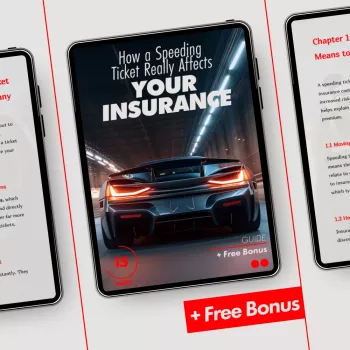
For drivers who want a step-by-step breakdown of timing, rating triggers, and realistic ways to limit premium damage, How a Speeding Ticket Really Affects Your Insurance: A Comprehensive Guide for Drivers goes deeper into what typically happens from citation to renewal.
When a single ticket becomes a bigger problem
For safety context on why higher speeds are treated more severely, the NHTSA’s speeding resource explains how speed increases crash risk and injury severity—data that influences how insurers view higher-mph violations.
Keeping future premiums low
If you’re also working on building better daily habits and decision-making under pressure, you may find practical mindset tools helpful alongside the insurance steps. Two options available now are Empower Your Inner Voice – A Practical eBook Guide on how to overcome self doubt, Build Confidence, and Strengthen Mindset for Personal Growth and Travel Solo With Confidence: A Practical Guide to Overcoming Fear and Anxiety for Solo Travelers.
FAQ
Will my insurance go up immediately after I get a speeding ticket?
Usually not. Many insurers re-rate on set cycles (often at renewal) and only after the ticket is recorded on your driving record, though some underwriting reviews can happen mid-term.
How long does a speeding ticket stay on my insurance record?
Many insurers consider violations for about 3–5 years, but the exact lookback window depends on your state and the company’s rating plan. More serious violations may influence rates for longer.
Does traffic school prevent an insurance increase?
It depends on state rules, court eligibility, and your insurer’s rating guidelines. Traffic school may help reduce points or preserve discounts in some cases, but it doesn’t guarantee a surcharge won’t apply.










Leave a comment