AI Workflow for Custom Meditation Scripts (eBook Ready)
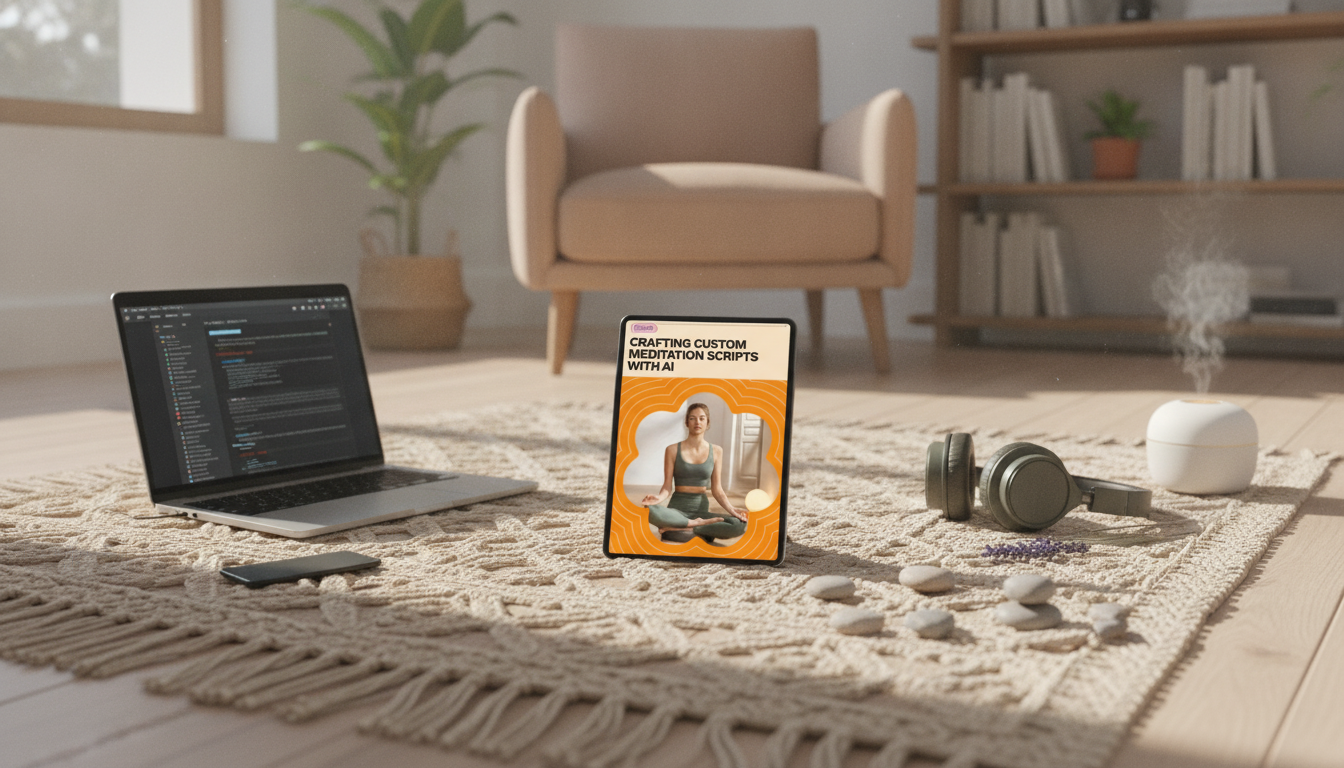
Creating meditation scripts that feel personal, consistent, and calming can be time-intensive—especially when building a full eBook. With a steady workflow, AI can help generate solid first drafts, create variations by theme, and keep your language gentle and permission-based—while you stay in control of pacing, inclusivity, and safety-minded wording.
What Makes a Meditation Script Feel “Custom”
A “custom” meditation script feels like it was written for a real person in a real moment. It meets the listener where they are, uses familiar context, and guides without pushing.
- Audience fit: beginner vs. experienced meditators; stress relief vs. focus vs. sleep.
- Context fit: a workplace reset, morning routine, pre-sleep wind-down, travel anxiety, or self-confidence support.
- Sensory specificity: breath cues, body scan language, gentle imagery, and optional soundscape notes.
- Tone consistency: compassionate, non-judgmental wording with simple sentences and steady pacing.
- Choice architecture: offering options (“if it feels comfortable…”) rather than commands.
- Length and structure choices: 3–5 minutes, 10 minutes, or 20 minutes; silent gaps vs. continuous guidance.
A Simple AI-Assisted Workflow From Idea to Finished Script
A repeatable system makes a full collection easier to build. The goal is to get a draft quickly, then shape it into something safe, readable, and consistent across chapters.
- Define the session goal in one line. Example: “Release tension after work and prepare for a restful evening.”
- Set parameters. Duration, reading pace, voice (gentle/neutral), and technique (breath, body scan, visualization, loving-kindness).
- Generate a first draft, then do a tone and safety pass. Soften intensity and remove absolute claims.
- Add personalization modules. Names/roles (optional), common stressors, preferred imagery (ocean, forest, cozy room), and cultural sensitivity notes.
- Create 2–3 variations per theme. Short, standard, extended versions help you build a chapter efficiently.
- Edit for rhythm. Shorten long sentences, remove jargon, add pauses, and avoid stacking too many instructions at once.
- Quality check. Readability, inclusive language, and a clear closing transition back to daily activity.
For general mindfulness background and how meditation is commonly discussed in health contexts, review resources from NCCIH and the American Psychological Association.
Core Building Blocks to Reuse Across a Full eBook
Reusable components keep your voice consistent, even when themes change. They also make it easier to create “choose your length” versions without reinventing the structure each time.
Script components that scale well into chapters
| Component | Purpose | Customization ideas | Common pitfalls to edit out |
|---|---|---|---|
| Settle-in | Helps the listener arrive and feel safe | Seated/lying options; environment cues | Overly strict posture rules; too many instructions at once |
| Breath anchor | Creates steady attention | Counting vs. natural breath; “soft belly” cue | Forcing deep breaths; implying breath control is required |
| Body scan | Releases tension and improves awareness | Focus on jaw/shoulders/hips based on audience | Using pain-focused language; rushing through body areas |
| Imagery | Supports emotion regulation and relaxation | Nature scenes; “safe place”; light/warmth imagery | Overly vivid trauma-adjacent imagery; making it mandatory |
| Closure | Transitions back to daily life | Short intention for the day; gentle movement cues | Abrupt ending; leaving out reorientation |
- Opening: posture options, eyes open/closed, a single intention line, and permission statements.
- Breath guidance: consistent cadence, optional counting, reminders that natural breathing is fine.
- Body scan: neutral, non-evaluative language; toe-to-head or head-to-toe.
- Imagery/visualization: keep it optional (“imagine or simply sense…”).
- Mind-wandering support: normalize distraction; return to a simple anchor (breath, sound, contact points).
- Closing: integration, reorientation cues, and a clear “end of practice” moment.
- Optional add-ons: affirmations, journaling prompts, reflection questions, and a brief “when to stop” note if discomfort arises.
Editing Rules That Keep AI Drafts Calm, Clear, and Credible
AI drafts can be surprisingly usable, but they often need human editing to stay grounded, accurate, and emotionally safe.
- Replace absolutes: swap “will cure” and “guaranteed” for “may help” or “often supports.”
- Use invitations instead of commands: “when you’re ready” and “if it feels comfortable.”
- Reduce intensity: avoid forcing emotional release; keep imagery optional and grounded.
- Maintain pacing: one instruction per sentence; add short pauses every 1–3 lines.
- Remove repetition loops: keep each paragraph doing one job.
- Avoid medical claims: meditation can complement care, not replace professional support.
- Ensure inclusive language: avoid assumptions about mobility, beliefs, finances, family roles, or lifestyle.
Turning Scripts Into an eBook People Will Actually Use
A helpful collection is easy to navigate, easy to repeat, and consistent enough that readers feel held by the structure.
A Ready-Made Guide for Crafting Custom Meditation Scripts with AI
- Crafting Custom Meditation Scripts with AI – AI for Creating a Custom Meditation Script eBook ($12.99)
- Empower Your Inner Voice – A Practical eBook Guide on how to overcome self doubt, Build Confidence, and Strengthen Mindset for Personal Growth ($18.99)
- Travel Solo With Confidence: A Practical Guide to Overcoming Fear and Anxiety for Solo Travelers ($12.99)
FAQ
Is it okay to use AI to write meditation scripts?
Yes—AI can speed up drafting and help you generate variations, but a human review is important to confirm tone, pacing, inclusivity, and to remove overpromising or medical-sounding language. Testing scripts with real listeners (or reading them aloud yourself) helps ensure the guidance feels calm and clear.
How long should a guided meditation script be for an eBook?
Common options are 3–5 minutes (quick reset), 8–12 minutes (everyday standard), and 15–20 minutes (deeper practice). Many collections work best when each theme includes at least two lengths so readers can choose what fits their day.
What should be avoided in guided meditation scripts?
Avoid absolute promises, forced breathing, intense or trauma-adjacent imagery, overly complex instruction stacks, and anything that sounds like medical advice. Permission-based phrasing and optional cues help keep the experience supportive for a wider range of readers.











Leave a comment