Flexible Daily Travel Schedule: Blocks, Buffers, Backups
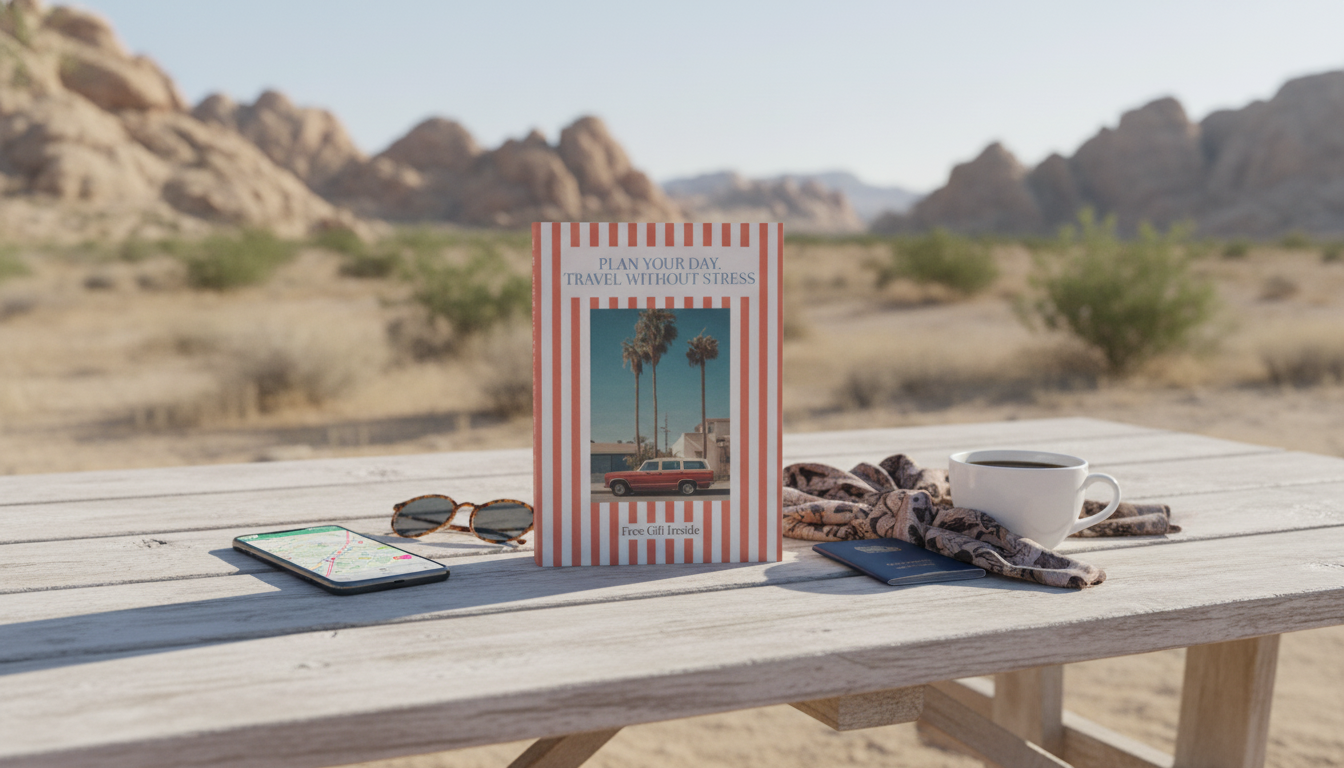
Plan Your Day, Travel Without Stress: A Smart, Flexible Daily Travel Schedule
A good day plan keeps travel smooth without locking every minute. The goal is a schedule that protects the “must-dos,” leaves room for discovery, and adapts to weather, lines, delays, and energy levels. Below is a simple method to build a daily travel schedule that stays realistic on the ground, plus a quick AI-assisted workflow to draft options fast and refine them into a flexible plan you’ll actually enjoy.
Start with the day’s non-negotiables
Begin by writing down what cannot move. These fixed points become the frame of your day, and everything else should support them.
- List fixed-time items first: timed tickets, check-in windows, reservation times, transit departures, and meeting points.
- Add constraints that shape the day: opening hours, last entry times, local holidays, and area-specific closures.
- Define 1–2 “anchor experiences” (the main reason for the day) to prevent overplanning.
- Set a realistic start time based on sleep, jet lag, and commute to the first stop.
Practical rule: if you have two timed commitments, plan the rest of the day to protect the earlier one. Starting late can domino into stress, so it’s better to trim one optional stop than to “speed-run” everything.
Build your schedule using time blocks (not a minute-by-minute script)
Instead of a tight itinerary that assumes perfect conditions, use blocks that can stretch or shrink. This keeps the day calm even when something runs long.
- Use 3–5 blocks: Morning / Midday / Afternoon / Evening, with each block assigned one priority experience and one optional backup.
- Add buffers automatically: 15–30 minutes between nearby stops; 30–60 minutes if crossing town or relying on transfers.
- Plan meals as flexible windows rather than a single fixed restaurant unless reservations require it.
- Protect energy by alternating “high-effort” activities (museums, hikes) with “low-effort” ones (cafés, viewpoints, markets).
| Block | Primary plan | Time estimate | Buffer | Backup option |
|---|---|---|---|---|
| Morning | Top attraction or guided tour | 2–3 hours | 30 min | Scenic walk + café |
| Midday | Lunch area + nearby sights | 1.5–2 hours | 20 min | Food hall or quick local staple |
| Afternoon | Second key experience | 2–3 hours | 30–45 min | Neighborhood exploration |
| Evening | Dinner + low-stress activity | 2–3 hours | 20–30 min | Early night / sunset viewpoint |
Choose locations that fit together geographically
Geography is the silent difference between a day that feels “easy” and a day that feels like constant commuting.
- Cluster stops by neighborhood to reduce transit friction and keep the day feeling calm.
- Avoid crossing the city more than once; if it’s necessary, do it during a lower-stakes block (often midday).
- Use one “base zone” per day where most activities happen, and treat anything outside as a deliberate excursion.
- Check the return route at night if safety, ride availability, or last trains are concerns.
Estimate time realistically (the hidden driver of stress)
AI-assisted itinerary drafting: a fast way to generate options
To make this easy to repeat each morning, a structured guide helps turn your inputs into a schedule format you can reuse across destinations. Plan Your Day, Travel Without Stress – Smart Travel Guide focuses on building flexible daily blocks, buffers, and backup plans without overstuffing the day.
Make it flexible: backups, triggers, and decision points
For solo travelers, decision points are especially useful because you don’t need group consensus—just a clear set of options. Travel Solo With Confidence: A Practical Guide to Overcoming Fear and Anxiety for Solo Travelers pairs well with flexible planning by helping reduce the “what if I mess up the day?” pressure that can cause overplanning.
Practical tools to keep the day on track
- Use offline maps and downloaded tickets for low-signal areas and transit stations. Google’s instructions for offline areas are here: Google Maps — Tips for downloading areas offline.
- Create a single note per day with: addresses, reservation codes, hours, and “how to get there” summaries.
- Set two alarms: “leave now” and “hard stop” to avoid running late to timed entries.
- Pack a micro-kit for schedule stability: water, snack, portable charger, light layer, and a small umbrella.
For international trips, it also helps to keep official references handy for health and entry guidance: CDC Travelers’ Health and U.S. Department of State — International Travel.
Recommended travel planning guides (digital)
- Plan Your Day, Travel Without Stress – Smart Travel Guide on how to create a daily travel schedule | Easy AI-Assisted Itinerary Planning for Smooth, Flexible Trips
- Travel Solo With Confidence: A Practical Guide to Overcoming Fear and Anxiety for Solo Travelers
- Empower Your Inner Voice – A Practical eBook Guide on how to overcome self doubt, Build Confidence, and Strengthen Mindset for Personal Growth
FAQ
How many activities should fit into one travel day?
A relaxed pace usually fits 1–2 anchor experiences plus 1–2 optional stops; a standard pace fits 2 anchors plus 1–3 optional stops; a packed day can fit more, but only if transit is short and queues are predictable. Transit time, lines, and meal breaks reduce capacity faster than most people expect.
How do buffers work in a daily travel schedule?
Buffers are planned “slack” time that absorbs delays so the rest of your day stays intact. A good default is 15–30 minutes between nearby stops and 30–60 minutes when crossing town, plus an extra buffer before timed tickets and before dinner reservations.
What should be included in an AI-assisted itinerary request?
Include your dates, lodging area, interests, budget, pace, mobility needs, and any fixed bookings, plus any must-see anchors. Ask for Plan A/B variants with neighborhood clustering, time estimates, and transit assumptions so you can compare a calmer option to a more ambitious one.












Leave a comment