Outdoor Bodyweight Workout Plan: Build Your Fitness Playground
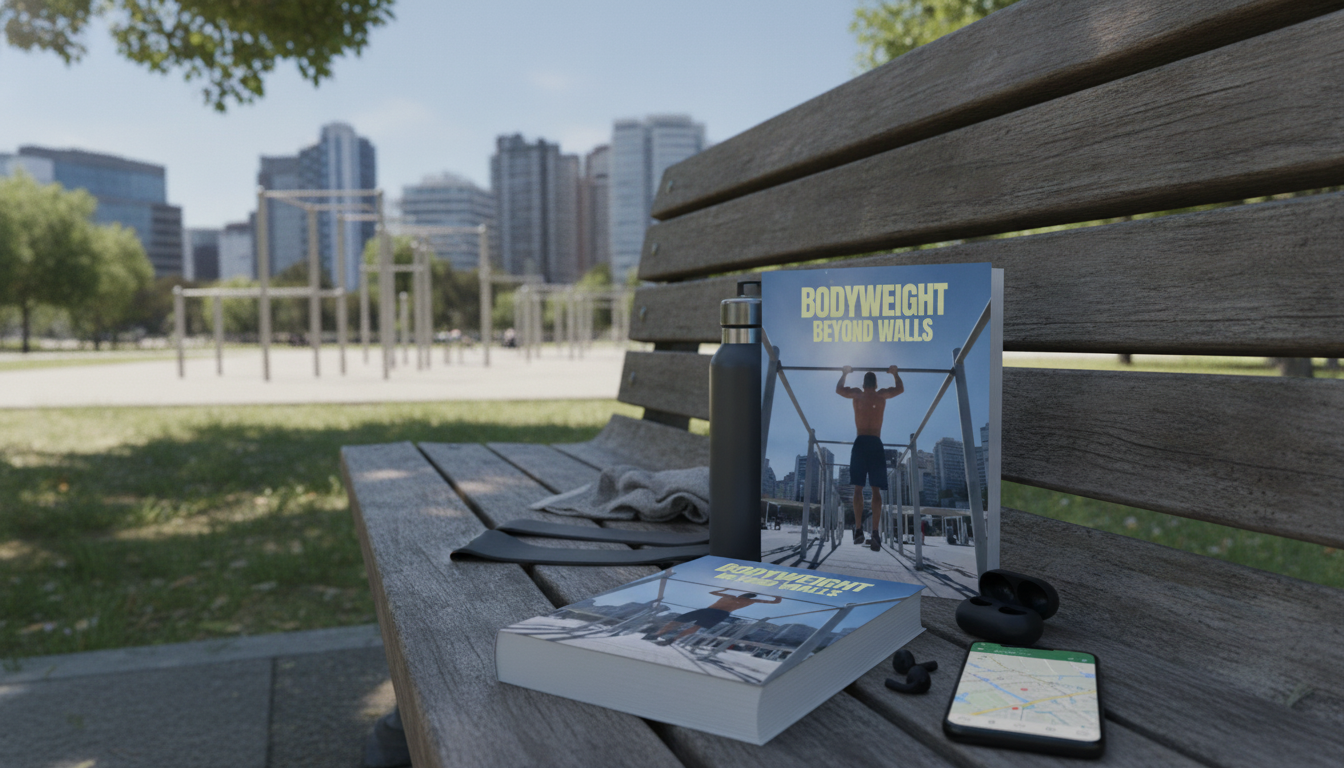
Bodyweight Beyond Walls: Turn Any Outdoor Space Into a Fitness Playground
Outdoor bodyweight training blends strength, cardio, and mobility using what’s already around you—benches, rails, stairs, hills, and open ground. Instead of waiting for perfect gym access, you can build a repeatable routine almost anywhere, then progress it week to week with small, measurable tweaks.
If you want a ready-to-follow format with station ideas and a simple progression path, check out Bodyweight Beyond Walls: Your Outdoor Fitness Playground – Outdoor Bodyweight Workouts Guide, No-Gym Training, Fresh Air Fitness Plan.
Why outdoor bodyweight training works
- Natural variety: Uneven ground, inclines, and changing surfaces quietly raise the demands on balance, foot control, and coordination.
- Built-in conditioning: Walking from bench to stairs to a hill adds low-friction cardio volume without needing extra “cardio days.”
- Low barrier to entry: No machines required—parks, schoolyards (when allowed), and quiet sidewalks can be enough.
- Mood and consistency: Training outside often feels less boxed-in, which can make it easier to show up regularly. For broader health benefits, see the CDC overview of the benefits of physical activity.
Choosing a safe outdoor “playground”
- Prioritize sturdy structures: Pick stable benches, solid railings, low walls, steps, and playground bars designed to support bodyweight.
- Scan for hazards: Wet leaves, gravel, broken glass, loose sand, and slick paint on metal rails can turn a good session into a slip.
- Check spacing and flow: Choose 3–5 stations within a short walk so the session stays efficient and your warm muscles don’t cool off.
- Respect rules and people: Don’t block paths, keep music low, and give playground users priority—especially kids and caregivers.
If you have any medical concerns before starting or ramping up intensity, it’s worth reviewing the ACSM preparticipation screening guidance.
Warm-up that fits outdoors (8–10 minutes)
- 2 minutes easy movement: Brisk walk, light jog, or fast marching in place.
- Joint prep: Ankle circles, hip circles, arm swings, and wrist pulses (especially if push-ups are on the menu).
- Activation: 2 rounds of 8–10 glute bridges, 8 scapular push-ups, and 20–30 seconds plank.
- Movement rehearsal: 5 slow squats and 5 incline push-ups on a bench before the main work.
Core movement patterns (and outdoor-friendly swaps)
Squat/lunge
Split squats on flat ground, step-ups on a bench, or walking lunges down a path. Pick the option that lets you keep your knee tracking smoothly over the toes without wobbling.
Push
Incline push-ups on a bench are a joint-friendly default. Move to standard push-ups on pavement when you can keep a solid plank line, then progress to decline push-ups (feet elevated) for more load.
Pull (if available)
Rows under a sturdy low bar/railing, pull-ups on monkey bars, or hanging knee raises. Pulling is often the limiting factor outdoors, so treat any safe pulling station like gold.
Hinge/posterior chain
Bodyweight good mornings, single-leg RDL reaches, and hill sprints (powerful and hinge-dominant). Focus on feeling the hips drive the movement rather than rounding the back.
Carry/locomotion
Bear crawls on grass, crab walks, and stair climbs build stamina plus shoulder and trunk endurance—perfect “in-between” work when equipment is minimal.
Sample outdoor workouts (mix and match by goal)
- Strength circuit (controlled pace): 3–5 rounds with 60–120 seconds rest between rounds.
- Conditioning circuit (steady sweat): 12–20 minutes continuous at moderate intensity with minimal rest.
- Skill + mobility (recovery-friendly): Crisp reps, longer rests, and extra stretching at the end.
Outdoor session builder (choose one option per row)
| Block | Option A | Option B | Option C |
|---|---|---|---|
| Lower body | Step-ups (8–12/leg) | Reverse lunges (10–16 total) | Stair climbs (30–60s) |
| Push | Incline push-ups (8–15) | Push-ups (6–12) | Pike push-ups (6–10) |
| Pull | Railing rows (8–12) | Pull-ups (2–8) | Isometric hangs (10–30s) |
| Core | Plank (20–45s) | Dead bug (8–12/side) | Hollow hold (10–30s) |
| Finisher | Hill strides (6–10 x 10–20s) | Fast walk/jog (8–12 min) | Bear crawl (4–8 x 10–20m) |
A simple 4-week fresh-air fitness plan
Aim for 3 days per week (for example, Mon–Wed–Fri) with optional easy walks on off days. For general targets that support health, the Physical Activity Guidelines for Americans provides a clear weekly framework.
If consistency is your biggest hurdle, pairing a training plan with mindset support can help. Empower Your Inner Voice – A Practical eBook Guide on how to overcome self doubt, Build Confidence, and Strengthen Mindset for Personal Growth is a practical companion for staying steady when motivation fluctuates.
Progressions without a gym
Training etiquette and weather-proofing
When to scale back or choose a different station
Using the guide as a plug-and-play companion
For a streamlined approach you can reuse in different parks and neighborhoods, Bodyweight Beyond Walls: Your Outdoor Fitness Playground lays out station choices, sample sessions, and an easy progression framework.
FAQ
How often should outdoor bodyweight workouts be done for results?
Three sessions per week is a strong baseline for strength and conditioning, with optional easy walks on off days. Progress by adding a round, adding a rep or two, or trimming rest slightly while keeping form clean.
What if there are no pull-up bars nearby?
Use safe alternatives like railing rows, sturdy post/towel rows where appropriate, isometric holds, and extra core work to balance pushing volume. If a structure feels unstable, skip it and choose a different station.
Is training on pavement safe for push-ups and planks?
Yes, if the surface is flat and clean and you manage wrist comfort with a towel, light gloves, or incline variations. Keep wrists as neutral as possible and switch to grass if impact or traction becomes an issue.










Leave a comment