Playground Safety Checklist: 60-Second Scan for Kids
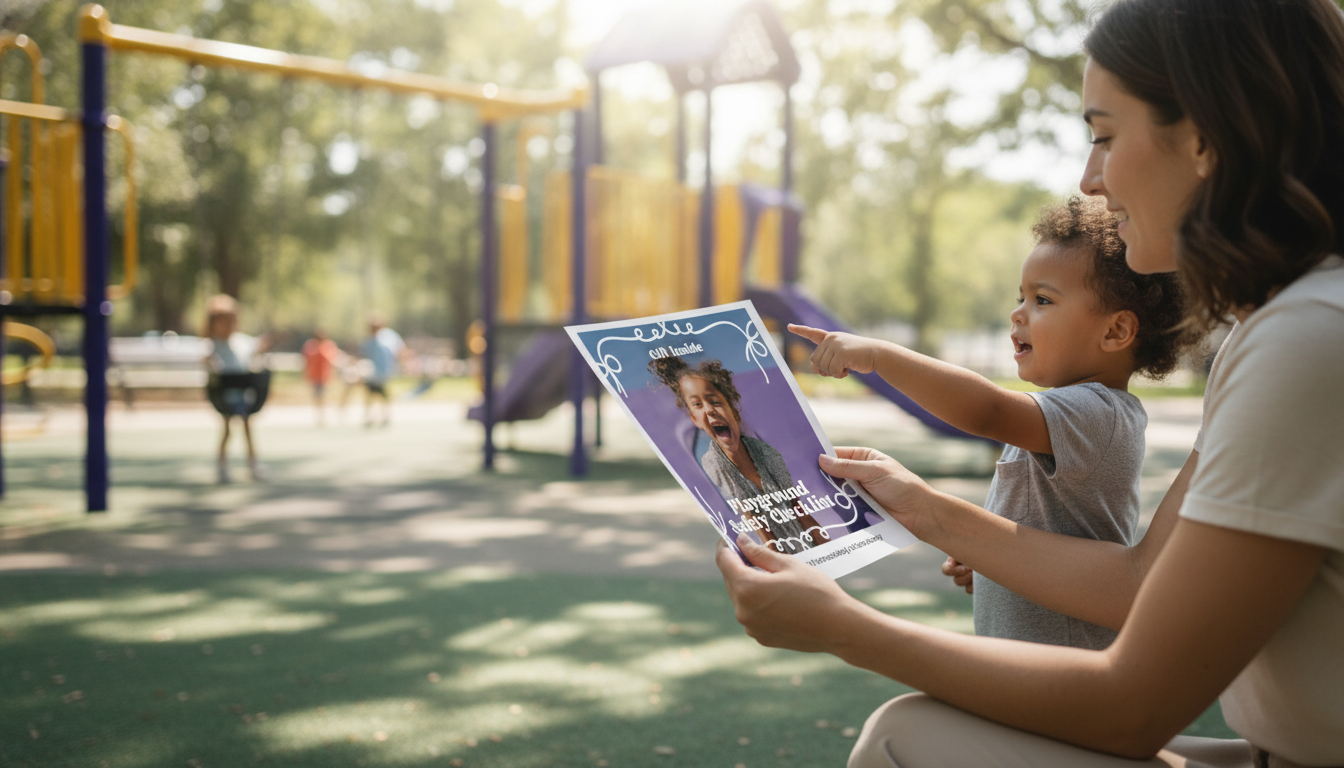
Playground Safety Checklist for Parents and Caregivers
Playgrounds help kids build strength, confidence, and social skills—yet many injuries happen during routine play. A consistent, quick check before play starts can reduce risks without taking the fun away. Use the sections below as a practical routine for parks, schools, and backyard play sets, then keep a printable checklist handy for repeat visits.
Fast pre-play scan (60 seconds)
A one-minute scan can prevent the most common “surprise” injuries—especially falls, collisions, and cuts.
- Look for obvious hazards before kids run ahead: broken equipment, missing guardrails, exposed bolts, sharp edges, or hanging chains.
- Check for unsafe crowding or rough play patterns (older kids occupying toddler areas, kids jumping off moving swings, bike/scooter traffic cutting through).
- Scan the ground for glass, litter, animal waste, standing water, or hidden obstacles under leaves/mulch.
- Identify the nearest exit points and any water hazards nearby (ponds, drainage ditches, unfenced pools).
- Pick a “home base” spot with a clear line of sight to the busiest equipment (swings, slides, climbing structures).
Quick playground safety checklist (print-friendly)
| Area | What to check | Pass/Needs attention | Notes |
|---|---|---|---|
| Surfacing | Loose-fill depth or mat condition; no exposed concrete/asphalt; no trip hazards | _____ | _____ |
| Swings | Clear zone in front/behind; seats intact; chains not twisted; no pinching points | _____ | _____ |
| Slides | No cracks/sharp edges; slide bed not excessively hot; exit area clear | _____ | _____ |
| Climbers | Stable structure; handholds secure; guardrails where needed; no gaps that trap heads | _____ | _____ |
| Open hazards | Glass/litter; standing water; broken fencing; nearby traffic or water | _____ | _____ |
Surfacing and fall zones
The ground matters as much as the equipment. Falls are a leading cause of playground injuries, so start where kids land—not where they climb.
- Prioritize the ground under and around equipment: most serious playground injuries involve falls.
- For loose-fill surfaces (mulch, wood chips, sand, pea gravel), check for thin spots under swings and slide exits where material often gets kicked away.
- Look for exposed roots, rocks, or concrete edges that can turn a normal fall into a serious injury.
- Confirm adequate clearance around moving equipment: swings need a wide open area in front and behind; merry-go-rounds and spinners need clear perimeter space.
- Avoid play if the surface is icy, extremely muddy, or slippery from algae near shaded areas.
For deeper guidance on public playground surfacing and spacing recommendations, see the CPSC Public Playground Safety Handbook.
Equipment checks: what to look for on common structures
Most playgrounds share the same “usual suspects.” Knowing what to check helps you spot problems quickly without turning playtime into an inspection.
- Swings: ensure kids don’t walk in front of moving swings; check for cracked seats, worn chains, and entanglement hazards (scarves, drawstrings).
- Slides: verify side rails are secure, the exit zone is clear, and the slide isn’t dangerously hot in direct sun (test with the back of a hand).
- Climbing walls and ladders: check for loose rungs/holds, excessive height for the child’s ability, and gaps that could trap heads or limbs.
- Platforms and bridges: look for missing guardrails, broken boards, and openings that a child could slip through.
- Seesaws and spinners: confirm handles and footrests are intact; watch for high-speed spinning and collisions in crowded areas.
If you want a quick refresher on common injury patterns and prevention basics, the CDC’s playground safety page is a helpful reference.
Age-appropriate play and smart boundaries
Even safe equipment becomes risky when kids use it in ways it wasn’t designed for. A few simple, repeatable boundaries protect everyone—especially in mixed-age groups.
- Use equipment designed for the child’s age range; toddler areas typically have lower heights and safer spacing.
- Set simple rules kids can remember: “one at a time on the ladder,” “sit on slides,” “hold on with two hands,” and “no pushing from behind.”
- Encourage taking turns and creating space between kids on climbers and at slide entrances to prevent pileups.
- Teach a “safe fall” mindset: step down when unsure, ask for help, and avoid jumping from high platforms.
- If older kids are dominating a shared structure, relocate to a quieter area rather than trying to manage competing play styles.
Supervision that prevents injuries (without hovering)
Effective supervision is less about constant correction and more about choosing the right vantage point and stepping in early when risk ramps up.
More age-based tips are also available through the American Academy of Pediatrics’ playground safety guidance.
Clothing, weather, and seasonal risks
If an injury happens: quick, calm steps
Make the routine easy: use a printable checklist
If you want a ready-to-print version to keep in your bag or car, see the Playground Safety Checklist (printable guide). For caregivers who want a practical boost in decision-making confidence and calmer boundaries, Empower Your Inner Voice can support a steadier mindset in everyday parenting moments.
FAQ
What are the most important things to check first at a playground?
Start with fall surfacing and clear zones: look for exposed concrete, thin mulch, and crowded swing paths. Next, scan for broken or sharp equipment and confirm your child is in an age-appropriate area.
How can a caregiver supervise multiple children on a busy playground?
Choose one line-of-sight “home base” that lets you see swing paths, slide exits, and climbing transitions. Prioritize high-risk equipment, set simple rules, and do frequent head counts—especially when kids move between areas.
When should kids avoid using playground equipment due to weather?
Avoid play when slides or platforms are dangerously hot, surfaces are icy or slick, or storms/lightning are nearby. After heavy rain, skip areas where traction is reduced or puddles hide hazards under loose-fill surfacing.











Leave a comment