Screen-Free Bedtime Routine for Kids: Connect, Calm, Close
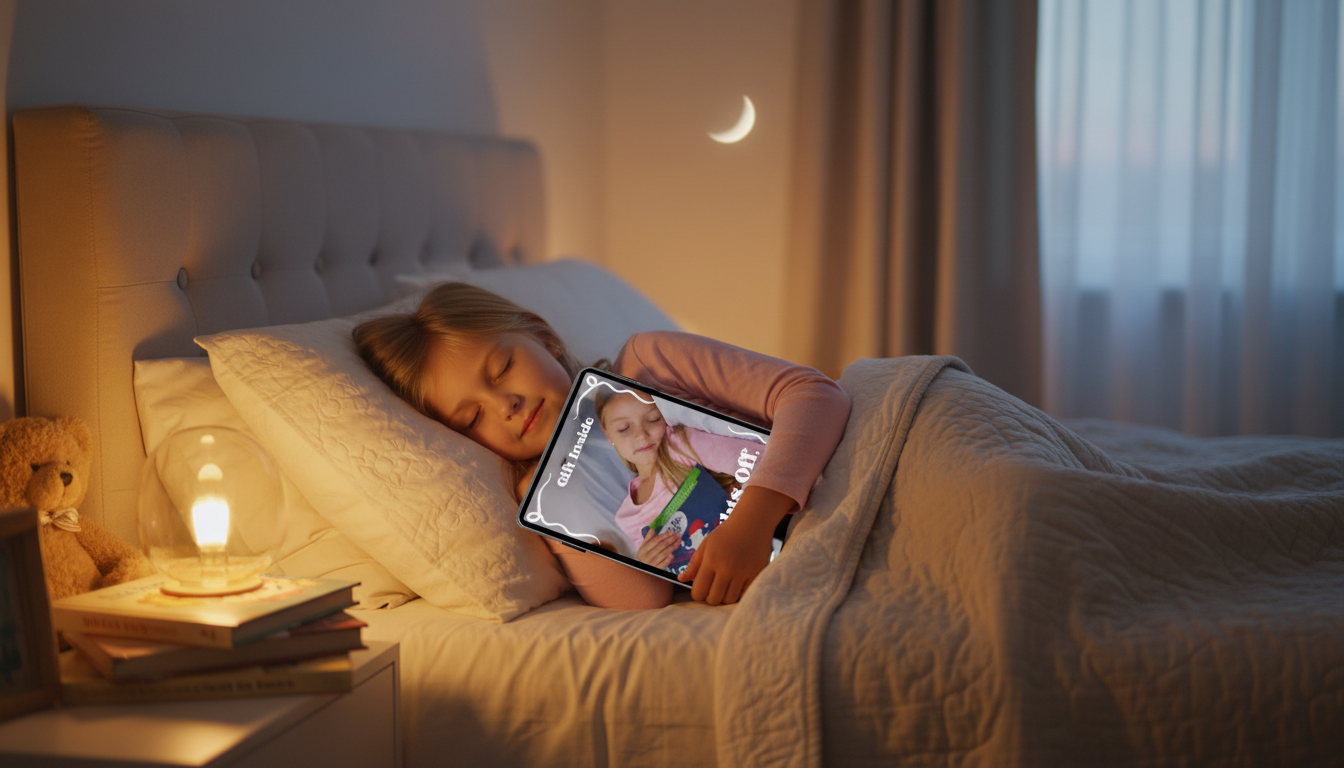
Why screens can make bedtime harder for kids
When screens show up in the final stretch of the day, bedtime often starts to feel like a tug-of-war. It’s not just the “fun factor”—many shows, games, and fast-cut videos keep a child’s brain in “go mode” right when it needs to downshift into rest. That mismatch can look like second winds, silliness, irritability, or sudden bursts of big feelings.
Light exposure matters too. Bright screens can delay the body’s natural slide into sleepiness, which may push bedtime later and make the next morning harder. And once a child is engaged, it’s easy to get trapped in the “one more episode” or “one more level” loop—creating nightly conflict that drains everyone.
The goal isn’t perfection. It’s building a predictable bridge from play to rest—one that your child can learn, recognize, and eventually follow with less effort.
A simple screen-free bedtime framework: Connect, Calm, Close
A screen-free routine works best when it’s easy to repeat and clear enough that kids know what’s coming next. A helpful structure is: Connect, Calm, Close.
Connect (5–10 minutes)
Start with brief, undivided attention. Think of it as topping off the “connection tank” before separation. A few minutes of focused presence often reduces the urge to stall later.
Calm (10–20 minutes)
Shift into low-light, low-noise activities that slow the body down: steadier breathing, fewer big movements, softer voices. Keep choices limited so the routine doesn’t turn into a new form of entertainment.
Close (2–5 minutes)
Finish with the same final steps in the same order—every night. A short closing ritual (a consistent phrase, a quick breath, a final hug) teaches the brain: “sleep happens next.” Consistency beats length; a shorter routine done nightly is more powerful than a long routine done occasionally.
A realistic 45-minute bedtime timeline (with swaps for screen habits)
Pick a clear cutoff time when screens go away and stay away—no “just this once” exceptions on ordinary nights. Then support the transition with environmental cues: dim lights, quieter voices, and a “night mode” atmosphere throughout the home, not just the bedroom.
If your child normally relies on a tablet or TV to settle, swap in sensory-friendly options like audiobooks, read-alouds, drawing, simple puzzles, or gentle music. Also add a small “transition job” so their hands and attention have somewhere to go: pajamas, choosing tomorrow’s outfit, putting toys “to sleep,” or placing a stuffed animal on the pillow.
| Time | What to Do | Why It Helps |
|---|---|---|
| T-45 | Screens off, quick snack/water if needed, bathroom | Prevents stalling and reduces late-night requests |
| T-35 | Bath or wash-up + pajamas | Warm-to-cool body shift supports sleepiness |
| T-25 | Quiet choice: coloring, simple puzzle, or calm play | Channels energy into low-stimulation activity |
| T-15 | Read-aloud or audiobook + cuddle | Connection + steady rhythm signals safety and rest |
| T-5 | Lights low, short breathing/relaxation, goodnight script | Creates a consistent “closing ritual” for sleep |
Calm tools that work when kids resist bedtime
Even the best routine hits bumps. When resistance shows up, the key is staying predictable while offering a small amount of control.
- Use “two-choice” options: “Do you want the dinosaur book or the space book?” Both choices lead to the same bedtime outcome, but reduce power struggles.
- Try a visual routine chart: A simple checklist (pictures for younger kids) cuts down on repeated questions and “what’s next?” negotiations.
- Add a 2-minute talk time or “worry container”: Let your child name worries, write them down, and place them in a small box/envelope to “hold until morning.”
- Pair breathing with a comfort object: Try inhale 4, exhale 6 while holding a stuffed animal to the belly and watching it rise and fall.
- Use a bedtime pass: One allowable request after lights out (one hug, one bathroom trip). If they use it, it’s gone; if they don’t, it becomes a small reward in the morning.
Age-by-age tweaks: preschool to preteens
Setting up the bedroom for sleep (without making it complicated)
For additional guidance on family screen habits and sleep health, see the American Academy of Pediatrics Family Media Plan, the CDC sleep resources, and the National Sleep Foundation’s sleep recommendations.
A ready-to-follow routine guide for peaceful nights
If you want a practical, repeatable system you can follow without reinventing the wheel each evening, Lights Off, Calm On – Screen-Free Bedtime Guide for Kids lays out a connection-centered plan built around consistent steps, screen-free activity ideas, and strategies to reduce bedtime battles.
For parents who also want support staying steady and confident during challenging transitions, Empower Your Inner Voice – A Practical eBook Guide offers tools for mindset and self-trust that can help you show up calmer and more consistent at bedtime.
FAQ
How long before bed should kids stop using screens?
A practical starting point is 30–60 minutes before bed, which aligns with common pediatric guidance to support easier wind-down. If bedtime is still difficult, extend the cutoff gradually and keep it consistent night to night.
What if a child only falls asleep with a tablet or TV on?
Use a gradual fade: switch from video to audio, reduce brightness and volume, and shorten the screen time a little each night while adding a predictable closing ritual (same final steps every evening). Over time, the routine becomes the sleep cue instead of the device.
What are good screen-free activities that actually calm kids down at night?
Stick to low-stimulation options like read-alouds, audiobooks, coloring, simple puzzles, gentle stretching, breathing games, or quiet music. Keep choices limited (two options is often enough) so the activity doesn’t become a new kind of hype.











Leave a comment