Silicone Slow Feeder Dog Bowl with Suction Cups (No Spills)
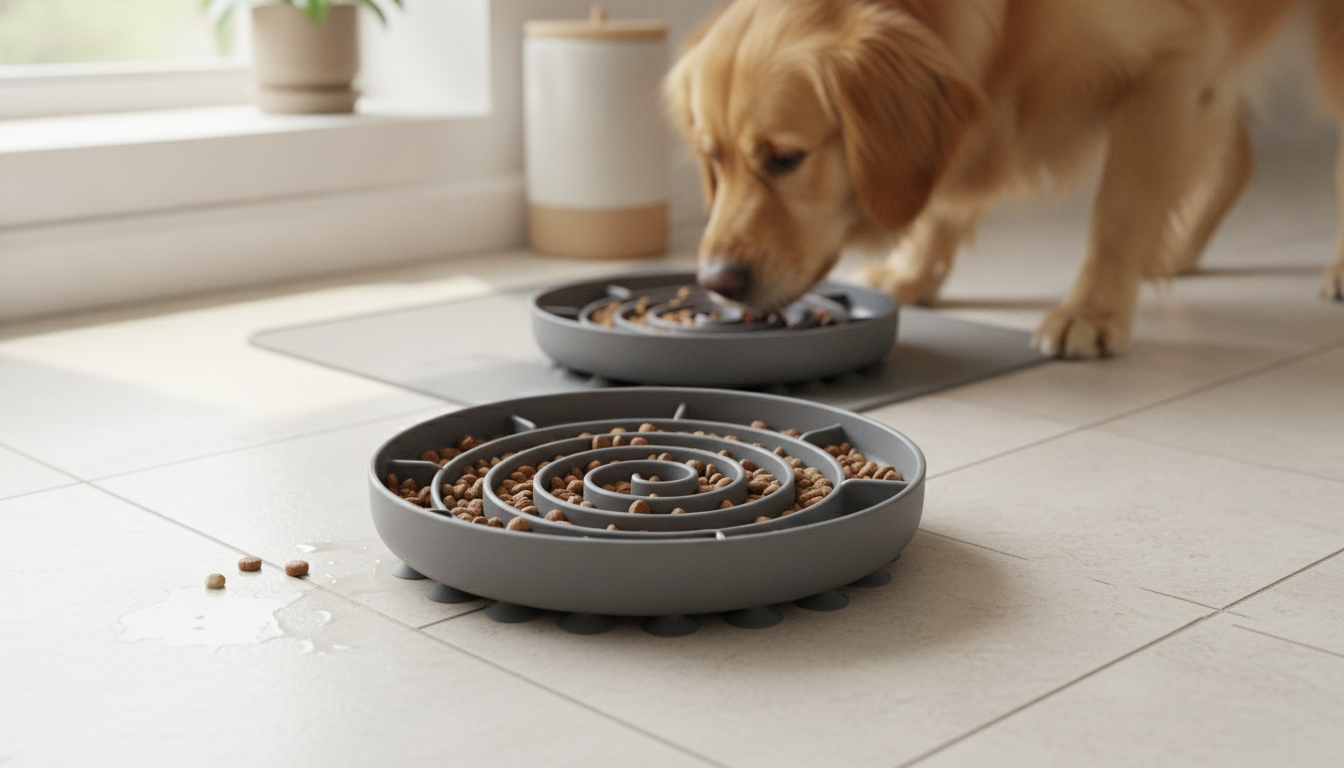
Durable Silicone Slow Feeder Dog Bowl with Suction Cups: Calm Mealtimes Without the Mess
Fast eating can turn meals into a noisy scramble—and sometimes a cleanup job. A silicone slow feeder with strong suction helps pace eating, supports digestion, and keeps the bowl planted on smooth floors, making feeding time calmer for both dogs and households. Instead of a dog “vacuuming” dinner in seconds (and then pacing, burping, or begging immediately after), a slow feeder encourages a more natural lick-and-forage rhythm that stretches mealtime into a steadier, more satisfying routine.
Why slower eating can matter
Many dogs don’t just eat quickly—they gulp. That speed can lead to swallowed air, coughing, gagging, and a general post-meal “blah” feeling for some pets. Slowing down is also an easy way to make everyday feeding more enriching, especially for dogs who need mental stimulation.
- Helps reduce gulping by creating obstacles that encourage licking and foraging behaviors.
- Can lessen mealtime coughing, gagging, and post-meal discomfort associated with eating too quickly.
- Adds enrichment that can keep dogs engaged and mentally stimulated during meals.
- Supports portion control by making it harder to finish food in seconds.
For dogs at risk of serious stomach issues, managing meal speed is often mentioned as one practical habit alongside other vet-recommended feeding routines. For background reading, see the American Kennel Club overview of bloat (GDV) and the Merck Veterinary Manual reference on GDV.
What suction cups change during feeding
A slow feeder can only do its job if it stays put. Suction cups help stabilize the bowl on smooth surfaces, which reduces sliding, flipping, and the “bowl chase” game that can ramp dogs up and actually make them eat faster.
- Stabilizes the bowl on tile, sealed wood, laminate, glass, or other smooth surfaces to reduce sliding and flipping.
- Helps prevent “bowl chasing” that can increase excitement and speed up eating.
- Makes it easier to offer wet food, raw, or mixed textures without the bowl moving around.
- Improves accessibility for dogs that struggle to keep a bowl in place (seniors, enthusiastic eaters).
Suction performance checklist by surface
| Surface | What to expect | Quick tip |
|---|---|---|
| Tile / sealed stone | Strong hold when clean and dry | Wipe surface and suction cups before pressing down |
| Sealed wood / laminate | Usually strong, depending on finish | Avoid dust; press from center outward |
| Stainless steel tray | Often excellent suction | Use a flat tray without texture |
| Unsealed concrete / textured floors | Weak suction | Place on a smooth mat or tray |
| Carpet / rugs | No suction | Use a feeding station or non-slip mat instead |
Durable silicone: comfort, grip, and everyday practicality
Silicone is a popular choice for slow feeders because it balances comfort with practicality. The flexible feel can be gentler on noses and faces than hard, sharp-edged plastic designs, and it tends to hold up well in daily rotation—especially for households that mix kibble with toppers, canned food, or fresh add-ins.
- Flexible material is gentler on noses and faces compared with rigid, sharp-edged designs.
- Naturally grippy feel can help keep the bowl stable even before suction is engaged.
- Better resistance to cracking than many hard plastics; suitable for daily use with wet and dry foods.
- Typically easier to wash because food residues release well from silicone grooves when soaked.
If you’re handling raw or mixed meals, safe food practices matter just as much as the bowl design. The AVMA pet food safety guidance is a helpful refresher on clean prep, storage, and preventing cross-contamination.
Getting the most out of a slow feeder (without frustration)
The goal is “slower,” not “stuck.” A good transition prevents a dog from getting overwhelmed and deciding the bowl is the problem. Small adjustments—like how you spread the food—can make a big difference in success.
- Start with an easier meal: spread food thinly so the dog learns the pattern without getting stuck.
- For kibble, consider mixing with a small amount of water or topper so pieces don’t bounce out of grooves.
- For wet food, press it into channels to increase licking time and reduce scooping.
- Supervise early uses to ensure chewing isn’t redirected to the bowl itself.
- If a dog seems overwhelmed, use a portion in the slow feeder and the rest in a regular bowl, then gradually increase.
Cleaning and care for long-term performance
Is this bowl a good fit for your dog?
Featured option
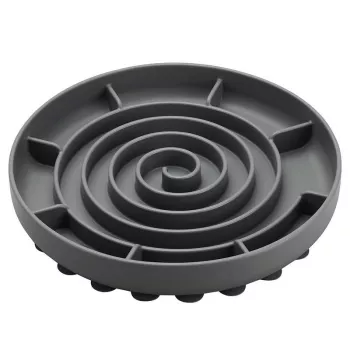
Durable Silicone Slow Feeder Dog Bowl with Suction Cups is designed to slow eating while staying anchored on smooth surfaces. It’s suitable for kibble, wet food, or mixed meals, and it’s especially helpful for reducing spills and bowl flipping when mealtimes tend to get chaotic.
Quick product snapshot
| Item | Details |
|---|---|
| Product | Durable Silicone Slow Feeder Dog Bowl with Suction Cups |
| Price | $17.82 (USD) |
| Availability | In stock |
| Product page | View details |
More in-stock picks
- Empower Your Inner Voice – A Practical eBook Guide on how to overcome self doubt, Build Confidence, and Strengthen Mindset for Personal Growth
- Travel Solo With Confidence: A Practical Guide to Overcoming Fear and Anxiety for Solo Travelers
FAQ
How do suction cups work best on a dog bowl?
Suction works best on smooth, clean, dry surfaces. Wipe the floor and the underside of the bowl, then press firmly to seal; textured floors and rugs won’t allow suction to hold well.
Can a slow feeder help with gulping and digestion?
Slowing a dog’s eating can reduce gulping and may help with discomfort that comes from eating too fast. It isn’t a medical treatment, so ongoing coughing, vomiting, or digestive issues should be discussed with a veterinarian.
Is silicone safe for dog bowls and how should it be cleaned?
Food-grade silicone is commonly used for pet bowls and is generally chosen for its flexibility and easy cleanup. Wash with warm, soapy water (soaking helps with grooves), rinse thoroughly, and replace the bowl if it becomes torn or heavily damaged.








Leave a comment