Index Fund Investing for Beginners: Simple 5-Step Plan
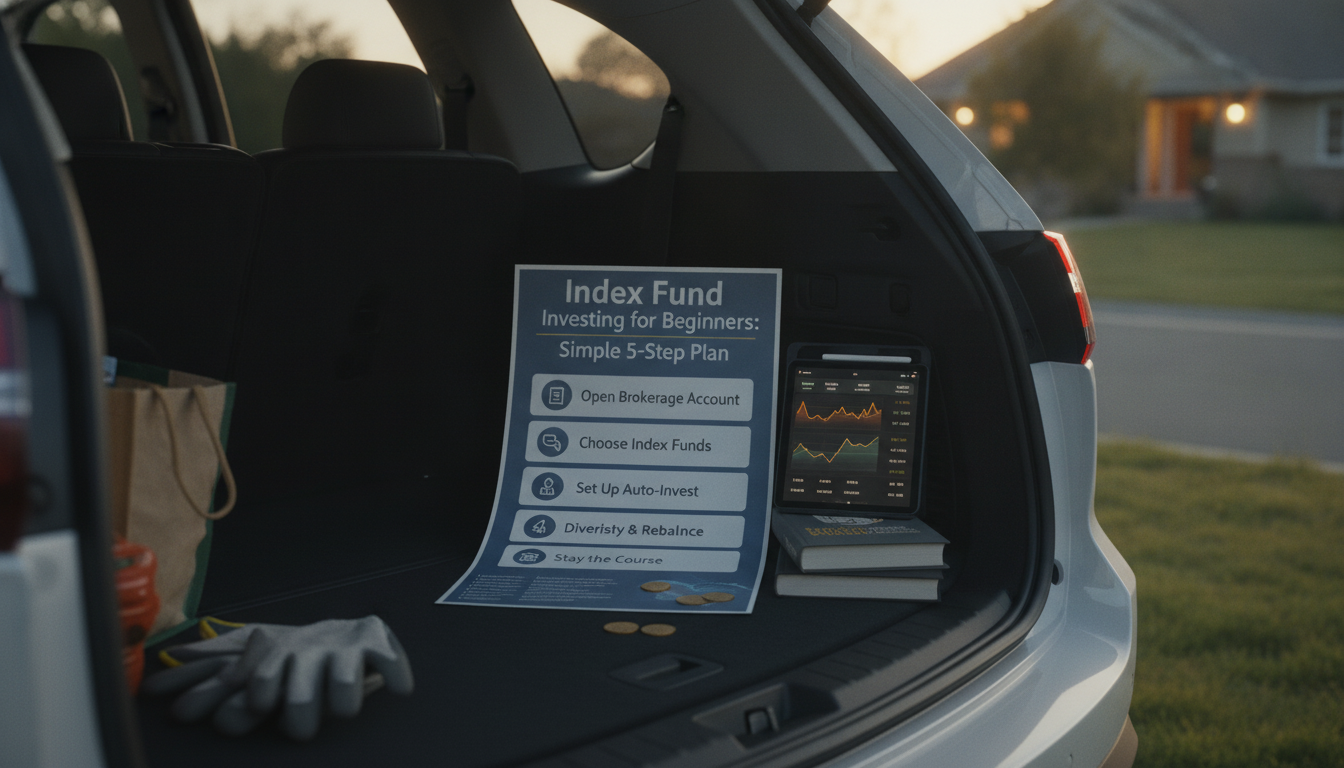
How to invest in index funds for beginners
Index funds are a beginner-friendly way to invest because they bundle many stocks or bonds into one fund that tracks a market index (like the S&P 500). Instead of trying to pick winners, you focus on broad diversification, low costs, and consistency.
1) Pick the right account first
Start by choosing where the money should live. If you’re investing for retirement, a 401(k) or IRA can offer tax advantages. If you’re investing for mid-term goals (like a home down payment in 5–10 years), a taxable brokerage account is often more flexible. If your employer offers a 401(k) match, contributing enough to get the full match is usually a strong first step.
2) Choose a simple index fund (or two)
Beginners often do well with either (a) a total U.S. stock market index fund, (b) an S&P 500 index fund, or (c) a target-date index fund that automatically adjusts risk over time. If you want to reduce volatility, consider adding a broad bond index fund—many people use a basic stock/bond split that matches their risk tolerance and timeline.
3) Compare costs and trading details
Look for a low expense ratio and avoid unnecessary fees. Also decide between mutual funds (often good for automated investing) and ETFs (trade like a stock). For ETFs, pay attention to commission-free trading at your brokerage and try to place trades when markets are open and spreads are typically tighter.
4) Automate contributions and keep it boring
Set up recurring deposits (weekly, biweekly, or monthly) and invest them automatically. This approach helps smooth out market ups and downs through dollar-cost averaging and reduces the temptation to time the market.
5) Rebalance occasionally and stay the course
Once or twice a year, check whether your stock/bond mix drifted too far from your target. Rebalancing helps manage risk without chasing performance. For a calm, step-by-step roadmap from picking funds to building a set-and-forget plan, see this beginner guide to index funds.
FAQ
How much money do I need to start investing in index funds?
Many brokers let you start with as little as $1 using fractional shares, and some index mutual funds have low or no minimums. What matters more is contributing consistently and keeping fees low.












Leave a comment